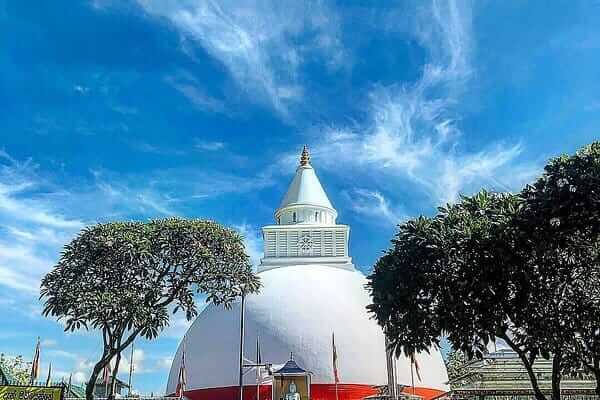
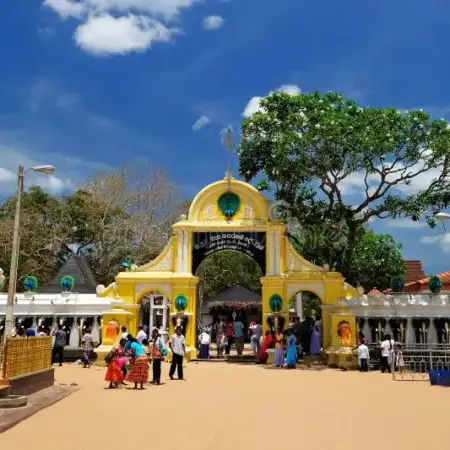
Kataragama, a sacred pilgrimage town in the southeastern region of Sri Lanka, holds great spiritual and cultural significance for devotees from various religious backgrounds. This tranquil destination, located in the Monaragala District, is known for its religious diversity, vibrant traditions, and proximity to natural wonders.
Kataragama experiences a tropical climate, featuring warm temperatures throughout the year. The dry season, from May to September, is the most popular time to visit, with sunny days and a lower chance of rainfall. The wet season, from October to January, brings occasional showers but also contributes to the lush greenery of the region.
The town’s most prominent religious site is the Kataragama Temple, dedicated to Lord Kataragama, a Hindu deity also venerated by Buddhists and some indigenous Sri Lankan communities. The temple complex features a sanctum for Lord Kataragama, and a unique ritual involving the lighting of oil lamps is a common sight. Devotees flock to the temple to make offerings and seek blessings.
One of Kataragama’s distinctive features is the annual Kataragama Perahera, a grand procession that showcases the veneration of Lord Kataragama and involves vibrant parades, traditional dance performances, and fire-walking ceremonies. This event, which takes place in July or August, attracts pilgrims and tourists from far and wide.
Kataragama is surrounded by natural beauty, with the Yala National Park being one of the most famous wildlife reserves in the country. This park is known for its diverse wildlife, including leopards, elephants, and various bird species.
The Tissamaharama Stupa, located a short distance from Kataragama, is an ancient Buddhist stupa of great historical and architectural significance. It offers a peaceful retreat and a glimpse into Sri Lanka’s rich heritage.
The nearby Lunugamvehera National Park is another pristine wilderness area, perfect for safaris and nature enthusiasts.
Kataragama’s unique blend of spirituality, cultural richness, and proximity to remarkable natural treasures makes it a must-visit destination for those seeking a deeper understanding of Sri Lanka’s religious diversity and an opportunity to explore the stunning landscapes of the southeastern region.