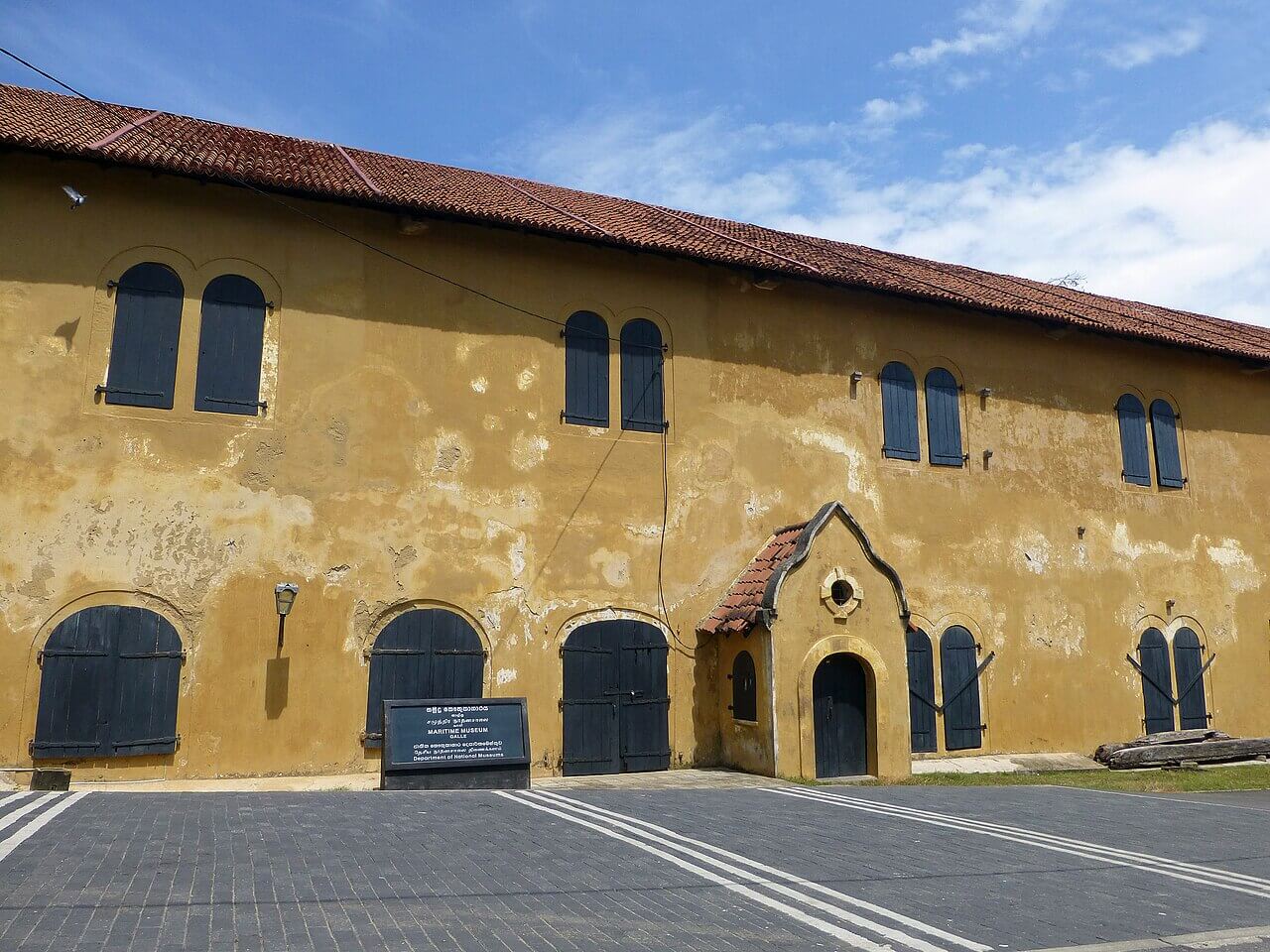
Step through the Old Gate of Galle Fort, where a weathered VOC crest still keeps watch, and the air changes. The bustle of modern Galle yields to salt-stained walls, cobbled lanes, and a rhythm set by the sea. Within this UNESCO-listed fortress on Sri Lanka’s southern coast, the Maritime Archaeology Museum anchors itself inside the restored Dutch Warehouse, a long colonnaded building that once sheltered cinnamon, lace, and dreams of ocean-bound profit. Today, it shelters stories—hard-won from coral-choked wrecks and monsoon-hardened maps—that explain why these waters pulled sailors from Arabia, China, Europe, and the Malay world for centuries.
The museum does not shout. It invites. As you enter, the scent of old timber and a touch of brine drift from exhibits lifted out of the sea, and your eyes adjust to a warm, honeyed light that filters through deep-set windows. Outside, gulls wheel over the harbor; inside, anchors lean like weary sentinels, and cannons stand amid glazed jars, coins, and fragments of porcelain. The Maritime Archaeology Museum makes the Indian Ocean feel intimate, telling its history through the things ships lost and the coastal communities saved.
Historical or Cultural Significance
Sri Lanka sits squarely in the path of the monsoon winds that powered ancient shipping lanes. Traders learned to trust the seasonal breezes, riding them east and west while carrying pepper, cinnamon, ivory, textiles, and faiths. Galle emerged as a node in this whirl of commerce, first for Arab and South Asian merchants, then for Portuguese, Dutch, and British empires. The fort’s bastions guarded the anchorage; its warehouses brimmed with spices; its alleys echoed with polyglot tongues. When ships misjudged reefs like the Great and Little Basses or foundered under sudden squalls, they left archives on the seabed. The Maritime Archaeology Museum reads those archives with care.
Many of the treasures here come from shipwrecks studied by Sri Lankan archaeologists and partners over decades. You will notice ceramic shards that match Ming blue-and-white, Dutch Delftware, and coarse earthenware used for daily rations. You will see the hardware of empire—cannons stamped with insignia, rusted anchors, and ballast stones—alongside the humble, human objects that feel closest: a tobacco pipe, a shoe buckle, a bottle with its neck uneven from a hurried glassblower’s breath. Displays explore famous local wrecks, like the Dutch ship Avondster that sank off Galle in the seventeenth century, and losses around the Basses reefs where currents can turn abruptly and surf roars white even on sunny mornings.
The museum also tells a recent story. The 2004 Indian Ocean tsunami surged into Galle and swept away much of the earlier maritime collection. In the years that followed, conservators and craftspeople rebuilt this space and restored waterlogged artifacts with remarkable patience. That resilience—local and collective—infuses the museum with meaning. It honors the people who lived by the sea, the sailors who trusted it, and the communities who continue to learn from it.
How to Get There
The most romantic way to reach the Maritime Archaeology Museum starts in Colombo with a coast-hugging train. Grab a window seat if you can. The locomotive pulls you past coconut groves and fishing villages, sometimes so close to the breakers that spray freckles the glass. Vendors hop on and off with paper cones of roasted peanuts and mango slices dusted in chili-salt; the carriage hums under a ceiling fan that squeaks into a rhythm all its own. After two to three unrushed hours, Galle’s cream-colored station greets you with palm shadows and a slice of harbor sky.
If you prefer the road, the Southern Expressway delivers a smooth ride, placing you in Galle in a couple of hours from the capital. Buses and shuttles run often; private cars follow the same route and let you pause for tea along the way. From Galle station or the main bus stand, a tuk-tuk will whisk you to the fort in minutes. Ask to be dropped at the Old Gate; the driver will know it. Walk under the stone arch with the VOC arms, turn onto the broad curve of Queen’s Street, and look for the long, low warehouse with thick columns and wooden shutters. That is the museum, just steps from the harbor breeze.
Many travelers arrive early and walk in. The fort’s lanes are flat, and the stroll doubles as a time capsule. You will pass lace-makers at doorways, a bicycle bell’s clear ding, saffron-robed monks moving toward the temple, and the lighthouse flashing pale in the morning sun. The museum, set near the fort’s northeastern edge, fits naturally into a day that blends seafaring history with coastal life.
What to See and Do
Trace the Lines of an Ocean-Facing Warehouse
Before any exhibit, notice the building. Thick coral-stone walls keep the heat at bay; the high ceiling breathes; timber beams carry a faint resin scent. Standing here, you can imagine bales of cinnamon stacked to the rafters and ledgers scratched with quill pens as ships creaked at anchor outside. The architecture holds the exhibits like a time-appropriate frame, and it sharpens your sense of place.
Follow Shipwreck Stories from Bow to Stern
Galleries unfold as narratives rather than catalogs. One room draws you into the Avondster, a Dutch East India Company vessel lost off Galle in 1659. Display cases gather her cargo and fittings—ceramics, iron, hull fastenings—and explain how archaeologists mapped the site, grid by grid, with slate boards, airlifts, and long mornings of patient measurement in low visibility. Another section evokes the Great Basses wrecks, where divers worked in surge and current to lift coins and fittings crusted like reef themselves. You can almost hear the hiss of a regulator and the grit of sand sliding between glove and artifact.
Stand Among Anchors and Cannons
One hall lines up anchors and cannons like a guard of honor. The iron blooms rough with centuries of salt, and each shape whispers a function—admiralty-pattern anchors with sturdy flukes, sleek signal cannons for salutes and warnings. Labels keep it accessible and not too technical, so you learn to tell one from another while still feeling the gravity of their weight and purpose.
Read the Sea with Charts and Monsoon Winds
Maps claim a quieter space. You will see coastal charts with serrated reef marks, hand-drawn routes that swing with the winds, and instruments—compasses, dividers, astrolabe replicas—that remind you of the gamble every voyage required. A breezy display explains the monsoon system in plain language and shows how traders planned departures with patience and cunning. Time your visit late morning, when sun slants across these maps and makes the ink glow a soft brown, as if still drying.
Meet Everyday Sailors Through Their Things
Beyond the hardware and routes, the museum excels at small stories. A clay pipe with a chipped bowl conjures a watchman on night duty. A pottery jar still smells faintly mineral and tangy, like the brine it held. A cluster of glass bottles, some collapsed into each other during a quick, hot firing, read like studio mistakes yet sailed halfway around the world in a crate. Children love the tactile replicas—rope knots to try, pulley systems you can test with a tug—and caretakers appreciate the benches placed under windows where a breeze can comb through the room.
Witness Conservation Without the Lab Coat
Panels describe how conservators coax waterlogged wood back into strength and how they stabilize salt-crusted metal so it does not crumble into orange dust. You will not step into a lab, yet the explanations bring that specialized work into reach. The story of recovery after the 2004 tsunami appears here, too, not as a tragedy reel but as a lesson in community, craft, and persistence.
Best Time to Visit
Galle rewards visitors year-round, though seasons shape your experience. From November to April, the southwest coast settles into a drier, brighter pattern. Sea skies run clean and blue, and light pours through the museum’s tall windows in ribbons that drift with the afternoon. The fort glows honey-gold near sunset, so you can pair your visit with a rampart walk and feel the day exhale. From May to September, the southwest monsoon brushes this coast. Showers can break without warning, and wind teases umbrellas into kites. Inside the museum, you stay dry and content, and the ocean outside turns drama-queen slate, which suits the shipwreck stories.
Arrive early to avoid midday heat. Morning air carries the smell of baking bread and the snap of laundry on lines behind courtyards. Late afternoons also feel kind, when the museum grows quieter and the stone floors hold a gentle cool. If your trip coincides with the Galle Literary Festival, usually held early in the year, consider timing your visit to soak up a broader cultural buzz around the fort.
Practical Information
The Maritime Archaeology Museum keeps straightforward hours, generally opening during the day and closing by early evening. Schedules can shift on public holidays, so check at the gate or with your accommodation before you set out. Expect a modest entry fee, with different rates for Sri Lankan residents and foreign visitors; children often receive a discount. The fee helps maintain both the museum and the conservation work it supports.
The fort’s climate runs warm and humid. Dress light, carry water, and wear comfortable shoes that grip well on slightly uneven stone. Photography without flash is typically welcome, and the staff appreciate it when visitors keep voices soft in smaller galleries. You do not need to cover shoulders or knees to enter the museum, though the fort includes temples and a historic church where modest clothing shows respect. For travelers with limited mobility, the ground-level entrance and broad doorways help, but floors can be irregular, and some displays sit up a low step. Call ahead if you have specific accessibility needs; staff do their best to assist.
Nearby Attractions
- Galle Fort Lighthouse: A short stroll away, with sweeping views of the reef and a salty, steady breeze.
- Ramparts at Sunset: Walk from Aurora Bastion to Flag Rock as the sky turns apricot and the sea breathes deep.
- Dutch Reformed Church (Groote Kerk): Quiet pews, creaking floorboards, and centuries of baptisms recorded in neat script.
- Old Gate with VOC Emblem: A fine photo stop and a reminder of the fort’s layered colonial past.
- National Museum of Galle: Complementary exhibits on local crafts, dress, and domestic life inside another heritage building.
- Meeran Jumma Mosque and Sea-View Promenade: A luminous white presence that locals cherish, facing the ocean.
- Unawatuna Beach and Rumassala Headland: Ten minutes by tuk-tuk for a swim, jungle breezes, and a view back to the fort.
- Galle Fish Market and Harbor: Early-morning action with colorful boats and the sharp, honest scent of the day’s catch.
Travel Tips
- Plan a half-day in the fort so you can linger in the museum without rushing the rampart walk.
- Buy your train tickets in advance for a window seat, or arrive early and ask kindly; station staff often help.
- Carry small change for the entry fee and a cool king coconut afterward from a vendor on Queen’s Street.
- Read display labels slowly; the stories reward attention and turn scattered artifacts into a living narrative.
- Pair your visit with a guided fort walk. Local guides enrich the maritime context with family memories and small secrets.
- Mind the sun. A hat and refillable water bottle make the day more comfortable and sustainable.
- Ask before photographing people, especially staff or craftspeople working near the entrances.
- Travelers of all ages and identities find the fort welcoming; trust your instincts and choose well-lit routes at night.
- If you travel with kids, turn the visit into a treasure hunt: find the oldest coin, the biggest anchor, the tiniest pipe.
- On rainy days, keep a light scarf to wrap around cold shoulders in overenthusiastic air-conditioning at nearby cafes.
Conclusion
The Maritime Archaeology Museum turns the Indian Ocean from a blue expanse into a collection of voices. You will hear them in the scrape of an anchor fluke, in a map dotted with soundings, in the curve of a bottle that crossed two capes to end here. Step back outside, and the fort resumes its daily music: bicycle bells, a vendor calling out “wade, wade,” palm fronds clapping lightly against the sky. Stand a moment on the rampart and glance toward the reef line where so many stories began and ended. You came for exhibits; you leave with a tide-clock inside you, set to a place where history floats to the surface and asks you to listen.
In Galle, the sea keeps teaching. The museum simply gives it a room, and for an hour or two, you get to stand inside the lesson.