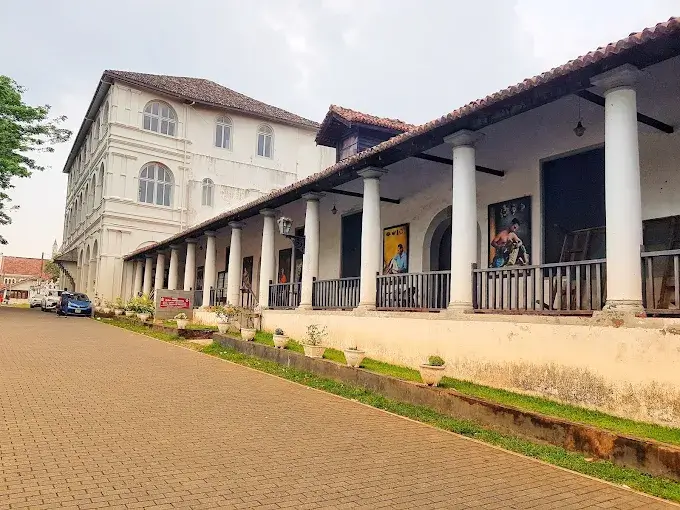
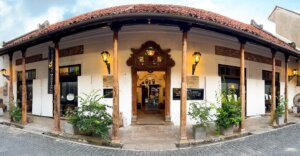
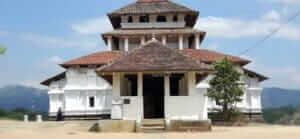
The National Museum Galle sits within the storied walls of Galle Fort, on Church Street, where sea-breeze-salted air drifts through narrow lanes lined with frangipani and mellowed Dutch façades. Walk past weathered coral-stone ramparts, and you will find this low-slung, cinnamon-hued building with a deep veranda, carved columns, and creaking wooden doors that welcome you into a slice of Sri Lanka’s living history. It belongs to a neighborhood where voices echo under terracotta roofs and the midday sun paints soft shadows on lime-washed walls.
Travelers often come to Galle for the fort’s cinematic sunsets and cobblestoned charm. Yet the National Museum Galle gives that beauty context. Inside, you step into a gallery of stories: Sinhalese craftsmanship beside Dutch period artifacts, handwritten scripts near beeralu lace, lacquer boxes gleaming like tropical beetles, and weathered maps that smell faintly of old paper and sea salt. In this museum, Galle ceases to be just a postcard-perfect coastal town; it becomes a crossroads where oceans, faiths, and trades met and merged.
Historical or Cultural Significance
Housed in one of the oldest standing Dutch buildings in the fort, the National Museum Galle bridges centuries. Traders once steered cinnamon-laden ships here, following monsoon winds to a safe anchorage that shaped Sri Lanka’s fortunes. The Portuguese fortified Galle in the 16th century, the Dutch expanded and formalized it, and the British polished its administrative edges. Through these shifts, local makers kept their art alive—carving intricate wood latticework, knotting lace with bobbins, and lacquering household objects with a mirrored sheen. The museum captures that resilience with quiet dignity.
What sets this museum apart is its focus on people as much as power. You see daily life in the curve of a mortar used to grind spices, the grip of an ebony chair polished by many hands, and the bright eyes of ritual masks painted in vermilion and turmeric yellow. Dutch coins lie beside palm-leaf manuscripts, telling a layered tale. Even the building’s coral-stone masonry, cool to the touch on a hot afternoon, speaks to the resourceful craft of local builders who used what the reef and the land offered.
How to Get There
The journey to the National Museum Galle often begins in Colombo, where the coastal railway snakes south. Choose a morning train, and sunlight will slant through open windows as the Indian Ocean glitters to your right. Vendors hop on with paper cones of salted peanuts, and children press their faces to the glass when the train hugs the shore near Hikkaduwa. You arrive at Galle Station, a short stroll or tuk-tuk ride from the fort’s main gate, where ramparts greet you like old friends.
If you prefer the road, take the Southern Expressway for a swift, smooth drive from Colombo to Galle. You leave high-rises behind and roll past paddy fields, rubber trees, and glimpses of temple spires. Closer to the city, the air grows saltier, and your driver may hum to classic baila tunes as buses painted in candy colors fly by. Enter the fort through the historic archways, and the city’s buzz drops to a pleasant murmur. Park outside or near the small lots in the fort, then wander on foot. Church Street unfolds slowly: aged shutters, soft pastel walls, and the murmur of café chatter lead you right to the museum’s veranda.
What to See and Do
Step Through Time in Dutch Period Galleries
Begin in the front rooms, where Dutch period furniture anchors the space with dark woods and restrained elegance. You stand before a heavy four-poster bed, its posts smelling faintly of oil and time, and imagine sea captains sleeping to the rhythm of monsoon rains. Cabinets display porcelain with blue waves and tiny windmills, reminders of trade routes that stitched Asia and Europe together. The light feels filtered here, softened by thick walls and a ceiling that creaks like an old ship.
Trace Local Craftsmanship in Beeralu Lace and Lacquer
In another gallery, beeralu lace unfurls in delicate patterns that mimic sea foam on sand. You might spot a bobbin display that shows how hands dance across threads, a practice introduced centuries ago and lovingly localized. Nearby, lacquerware glows in deep reds and coppers, lines of geometry so precise you lean in to follow every curve. A small chest, burnished to a mirror, reflects your curiosity back at you. Although the museum feels calm, the objects hum with stories of family workshops and market days.
Decode Masks, Scripts, and Symbolic Art
The ritual masks are a burst of color after the polished woods. Carved with expressive eyes and flamboyant noses, they suggest healing dances, satire, and age-old theatre. You learn how performance and belief once intertwined in village life, and how communities still adapt these arts. A case of palm-leaf manuscripts, inscribed with ink and stylus, adds quiet contrast. Their pages, a dry whisper when turned, contain poetry, medicine, and chronicles that root the fort’s glamour in centuries of knowledge and faith.
Study Maps, Coins, and Maritime Memory
If maps are your weakness, pause at the cartographic corner. Fragile lines of ink chart islands, winds, and ambitions. Coins and seals bear emblems that once guaranteed trade, and their edges carry the soft wear of many hands. Look for small maritime artifacts that link this museum to Galle’s seaworthy soul. The scent of old paper and beeswax polish hangs in the air, and time stretches as you follow a compass rose toward the horizon.
Pause in the Courtyard and Browse the Small Shop
The museum’s courtyard offers a breather. A frangipani tree might drop a single waxy flower at your feet, and the stone floor holds pockets of shade. From here you hear the fort’s life—bicycle bells, birds that cling to rooflines, and the distant hiss of surf beyond the ramparts. Before you leave, browse the modest shop for postcards, slim guides, or locally made crafts. They make gentle souvenirs that carry the museum’s quiet spirit home.
Best Time to Visit
Galle welcomes visitors year-round, yet the mood shifts with the monsoon’s pulse. From December to March, skies usually run clear, seas turn sapphire blue, and the fort glows in late-afternoon gold. The National Museum Galle feels pleasantly cool at midday thanks to thick walls, so you can duck in for an hour when the sun gets fierce. Late afternoons offer softer light for photos and an easy transition to sunset on the ramparts.
April brings warmth and school holidays, so the fort buzzes with family outings. From May to September, the southwest monsoon sends bursts of rain and dramatic clouds. Museum days then feel especially rewarding; you wander galleries while rain taps on clay tiles, and afterward sip hot tea at a nearby café. October and November can be wetter, yet you gain quieter streets and a gentler pace. No matter the month, mornings and late afternoons suit unhurried exploration.
Practical Information
Opening hours typically run from mid-morning to late afternoon, often around 9:00 to 17:00, with closures on some public holidays and possibly one weekday. These details can change, so confirm current hours at the entrance or with the Department of National Museums before you plan your day. Entry fees vary for residents and international visitors, with concessions sometimes available for children and students. Keep small bills in Sri Lankan rupees to make payment smooth and quick.
The museum allows photography in many areas, though staff may request no flash to protect delicate objects. Respect those guidelines, and move with care through narrow doorways and slightly uneven floors that come with historic buildings. Galle’s coastal weather runs warm and humid, so light clothing, a hat, and refillable water bottle help a lot. Dress modestly when visiting cultural sites, and greet staff with a friendly “Ayubowan” or “Good morning.” These small courtesies open generous conversations.
Nearby Attractions
- Galle Fort Ramparts – Walk the walls at sunset as fishermen cast lines and the lighthouse turns pale gold.
- Galle Lighthouse – A gleaming beacon beside emerald lawns and surf that snaps white against the rocks.
- Dutch Reformed Church (Groote Kerk) – A serene interior with old tombstones and cool, echoing aisles.
- Maritime Archaeology Museum – A separate venue that explores shipwrecks, trade routes, and ocean lore.
- All Saints’ Church – Stained glass, carved pews, and a contemplative hush away from the bustle.
- Flag Rock Bastion – A favorite perch for sunset, sea squalls, and fearless cliff divers on calm days.
- Pedlar Street – Boutiques, beeralu lace shops, and cozy cafés that roast cinnamon with coffee beans.
- Jungle Beach (Unawatuna) – A short ride away for snorkel-friendly waters and a pocket of green shade.
Travel Tips
Good planning keeps your visit light and joyful. Consider these practical suggestions as you explore the National Museum Galle and the fort beyond.
- Visit earlier in the day to enjoy cooler temperatures and quieter galleries.
- Buy a bottle of water before you enter; old buildings can feel warm at midday.
- Wear comfortable shoes with a grip for polished floors and cobblestone lanes.
- Ask staff questions; their insights turn objects into stories you will remember.
- Combine the museum with a rampart walk and lighthouse stop for a balanced day.
- Carry cash in small denominations for tickets and nearby cafes.
- Respect signs about photography and avoid touching fragile pieces.
- If you use a wheelchair or stroller, check access at the entrance and allow extra time for thresholds.
- During rain, bring a compact umbrella; galleries feel magical with showers on the roof.
- Support local makers by purchasing ethically made beeralu lace or documented crafts.
Conclusion
In a fort known for cinematic seascapes and postcard lanes, the National Museum Galle is where whispers turn into full stories. Its rooms carry the hush of coral-stone walls and the murmur of tides, while objects speak of makers, merchants, and families who shaped this coast. You move through galleries that smell of wood and wax, then step into sunlight and salt air with a clearer sense of place. Galle Fort remains beautiful, yet now it feels more alive, layered, and inclusive of the many hands that built it.
When you leave, take one last look at the veranda, the columns, and the frangipani’s white stars. The museum shows that history is not a locked cabinet but an open doorway. Walk through it, listen well, and carry its stories forward as you wander to the lighthouse or stand on Flag Rock, watching waves tumble the same way they have for centuries. In that moment, Galle belongs to everyone who walks its walls with curiosity and care.