Location & Overview – where Sri Sudharmalaya Buddhist Temple sits and why it matters
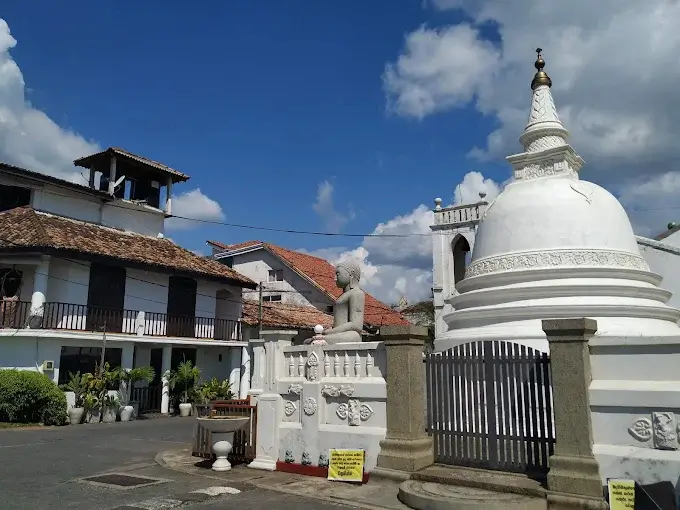
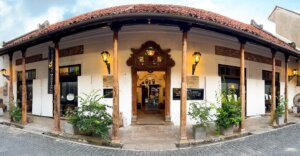
Slip through the old stone arch of Galle Fort and follow the sea breeze along Rampart Street, and you will spot it: a gentle sweep of white walls, a bell tower with arched windows, and a modest stupa glowing against the Indian Ocean light. Sri Sudharmalaya Buddhist Temple, also called Sudharmalaya Viharaya, rests inside the storied fort of Galle on Sri Lanka’s southern coast. It offers a soft, contemplative pause amid colonial masonry, boutique cafés, and salt-sprayed bastions. The temple’s calm presence grounds the fort’s cosmopolitan energy, and its courtyard, perfumed by frangipani, invites you to slow your pace and listen.
With the ocean rolling against the ramparts only a few steps away, the temple feels stitched into both the island’s Buddhist traditions and the maritime rhythm of Galle. Locals step in before work to light a lamp, travelers drift through at sunset with sandy flip-flops dangling from fingertips, and monks in saffron robes move quietly across the tiled verandah. The temple doesn’t shout for attention. It welcomes you with soft edges, pale color, and the occasional clear chime of its bell floating above the fort’s red-tiled roofs.
Historical or Cultural Significance
A living sanctuary inside a world heritage fort
Galle Fort, a UNESCO World Heritage Site, carries centuries of layered stories: Portuguese beginnings, Dutch ramparts of coral limestone, and British-era bungalows that now hold cafés and galleries. Within that swirl of history, Sri Sudharmalaya feels both resilient and intimate. The temple grew as a focal point for the Buddhist community living inside the fort’s walls, balancing the European skyline of churches and clocktowers with a distinctly Sri Lankan place of worship. Its architecture still hints at colonial influences, with pillared porticos and a bell tower that could pass for a chapel’s belfry at first glance, until the stupa’s soft dome corrects your eye.
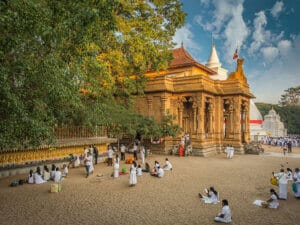
On full-moon Poya days—monthly holidays central to Sri Lankan Buddhist practice—the temple hums from dawn, with white-clad devotees bringing flowers, rice, and fragrant joss sticks. The scent of jasmine and sandalwood hangs heavy in the halls, and the sound of pirith chanting threads through the fort’s streets. Children shuffle in on tiptoe, parents bow with palms together, and the courtyard turns into a sea of white and color as offerings are arranged like small gardens before serene Buddha images.
How to Get There
Coastal train, palms flickering past the windows
If you come by train from Colombo, take the Coastal Line that hugs the shore for much of the journey. The carriage fills with sea light and the chatter of families heading south; fishermen’s skiffs tilt beyond palm fronds; station names flash in Sinhala and English. When the train pulls into Galle, you step into a breezy station where tuk-tuks jostle politely and vendors sell king coconuts with bright orange husks. From the station, it’s a short tuk-tuk ride to Galle Fort. Ask the driver to drop you near Rampart Street, and then amble toward the ocean’s steady hush until you see the temple’s white bell tower.
By expressway or bus, then on foot
From Colombo’s bus terminals, air-conditioned coaches zip down the Southern Expressway to Galle in around two hours. If you prefer the scenic slow lane, coastal buses rattle cheerfully from town to town, letting on seashell sellers, schoolchildren, and tall stacks of bread balancing on bicycle racks at stops. Either way, you’ll find tuk-tuks at Galle’s main stand to bring you into the fort through the Old Gate, the one decorated with the VOC emblem of Dutch rule. Inside the fort, walk; the streets prove small and textured, and the temple feels best approached at a human pace, with the sound of your steps mingling with the surf.
What to See and Do
Let the stupa and bell tower frame your first impressions
Stand in the lane and take in the temple’s slightly European façade, its arches and cornices painted the color of fresh coconut milk. Look closer and Sri Lanka emerges everywhere: a white stupa tucked within the courtyard, frangipani trees casting stars of cream and gold across the paving, and small terracotta oil lamps lining a ledge. The bell, when it rings, drifts above everything; it sounds clean and bright, and it carries far across the ramparts, as if calling both sea and city to pause.
Step inside to the shrine room
Slip off your shoes and hat at the entrance, and feel the coolness of tiles underfoot. Inside, the shrine room glows softly with painted walls, carved lotus motifs, and a Buddha image that holds your gaze with a quiet steadiness. Visitors often bring garlands—white, purple, fragrant—and lay them carefully beneath the Buddha’s hands. You can light an oil lamp as a gesture of goodwill; watch the wick catch with a small sigh, and let its glow mirror the stupa’s curve outside.
Circle the stupa and listen for chanting
Move clockwise around the stupa, letting your breath find a rhythm with your steps. If you visit in the early evening, you might hear chanting begin: the low, resonant syllables of pirith that roll like tidewater. You don’t need to join in to feel its effect. Just stand still in the courtyard, watch swallows cut the air above, and let the sound draw your thoughts into a calmer shape.
Seek small details for your camera and your memory
Photographers often love Sri Sudharmalaya’s delicate contrasts: white plaster against a stormy sky, saffron robes bright against old coral stone, and the bell tower framed by bougainvillea. Ask before you photograph people, and avoid pointing your lens directly at worshippers in prayer. Some of the loveliest images happen in the in-between moments anyway: a dropped frangipani on steps, a flicker of lamp flame, or a monk’s umbrella leaning against a pillar like a quiet exclamation point.
Pair the visit with a sunset rampart walk
After time in the temple, stroll to the ramparts as the sun slides low. The ocean smells like salt and spray, and the fort’s bastions glow honey-gold. Kites hang in the air; couples lean into the wind; cricket games bloom in any open space with bursts of laughter. You’ll carry the temple’s calm with you, and the sea will fill the rest.
Best Time to Visit
Galle’s driest, sunniest months usually run from December to March, when the southern coast wears a bright, crisp light and the evenings promise painterly sunsets. During this season, the temple’s white walls read almost luminous, and the flagstones warm your bare feet without burning. Early mornings carry cool air and birdsong; late afternoons feel gentle and kind on the skin.
The southwest monsoon (May to September) brings rain, often in expressive bursts that sweep through and leave the world rinsed and glistening. Visiting during a shower can feel magical: you’ll stand under the temple eaves with locals, sharing space, watching raindrops bead on frangipani and slide in silver lines from the bell tower. October and November tend to be changeable, with scattered downpours and moody clouds that produce dramatic photographs and fewer crowds.
If you can plan around the full moon, consider a Poya day visit. It offers an intimate glimpse of living tradition, though it also draws more people, so arrive early and dress with extra care.
Practical Information
Entry, hours, and donations
Sri Sudharmalaya typically keeps its doors open from early morning until early evening. There’s no fixed entry fee, and donations help with maintenance and daily offerings. A small box sits near the shrine; contribute what feels right for you.
Respectful dress and behavior
Wear clothing that covers shoulders and knees, and remove hats and shoes before stepping into the shrine or the stupa area. Keep voices soft, silence your phone, and avoid standing with your back directly to Buddha images for photos. If a ceremony is underway, watch from the side and let worshippers pass freely.
Weather, comfort, and accessibility
Galle’s tropical heat can feel strong by midday, so bring water, sunscreen, and a light scarf or shawl. The temple has a few steps and narrow thresholds; if you use a wheelchair or have mobility considerations, a companion can help navigate the entrance and courtyard. Inside the fort, streets are cobbled and sometimes uneven, so walk with care and enjoy the slow pace.
Language and connection
Staff and devotees often speak Sinhala and some English. A greeting of “Ayubowan” meets smiles almost instantly, and “Bohoma istuti” for “thank you very much” goes a long way. If you wish to learn more, ask gently and accept that temple caretakers may be occupied with rituals or visitors. Kind curiosity opens doors more than any scripted question ever will.
Nearby Attractions
- Galle Lighthouse: A short walk through charming lanes to the island’s iconic white tower and a breezy view over the reef.
- Flag Rock Bastion: The fort’s favorite sunset perch, where waves boom against rock and street vendors sell lime-sparked pineapple.
- Dutch Reformed Church (Groote Kerk): A cool, echoing interior with vintage floor tombs and a striking organ loft.
- All Saints’ Church: A graceful Gothic revival church with timber trusses and stained glass that bathes pews in color.
- Meera Mosque: An elegant mosque with a green-and-white façade, reflecting the fort’s diverse faith traditions.
- Old Dutch Hospital: A colonnaded complex turned dining precinct, lovely for iced tea and people-watching.
- National Maritime Museum: Exhibits on shipwrecks and trade routes that shaped Galle’s ocean-facing identity.
- Pedlar Street: Boutiques, gelato stands, and art spaces strung along a photogenic, bougainvillea-draped lane.
- Unawatuna Beach: A quick tuk-tuk ride away for a post-temple swim in calm, blue-green water.
- Japanese Peace Pagoda at Rumassala: A gleaming white stupa on a forested headland with sweeping coastal views.
Travel Tips
Plan your visit so the temple becomes a quiet anchor to your Galle Fort day. A little forethought helps you settle more deeply into its atmosphere and the surrounding lanes.
- Arrive early or late afternoon to avoid the hottest hours and to catch the softest light for photographs.
- Carry a small bag to store your shoes; courtyards sometimes feel warm underfoot by midday.
- Bring fresh flowers from a fort-side vendor if you wish to make an offering; white jasmine and blue water lilies are traditional.
- Stay for ten unhurried minutes after lighting an oil lamp; the calm grows clearer when you give it time.
- Combine your visit with a loop along the ramparts, starting near the lighthouse and ending at Flag Rock as the sky turns apricot.
- Choose modest, breathable clothing in light colors; it keeps you comfortable and shows respect in sacred spaces.
- Keep small change handy for donations and a post-visit king coconut from a street vendor.
- Mind uneven stones and low thresholds; look where you step while taking photos.
Conclusion
Sri Sudharmalaya Buddhist Temple doesn’t seek grandeur; it offers presence. In a fort built by sailors and soldiers, it brings balance with ritual, fragrance, and a bell that measures time more kindly than any clock. You step in from the salt-bright street, set your shoes beneath a bench, and feel the day rearrange itself into simpler parts: breath, light, and a steady heartbeat of chant. When you step out again, the sea breeze feels cooler, colors look sharper, and Galle’s lanes hold more tenderness than they did an hour ago. Let the temple be your compass as you wander; it points not only to a spot on Rampart Street, but also toward the quiet you carried all along.