Cradled by granite boulders and emerald paddy fields just inland from Unawatuna, Yatagala Rajamaha Viharaya feels like a quiet breath between the sea breeze of Galle and the heat of the southern sun. Only a short ride from the fort’s ramparts, this rock temple hides in a village pocket where the rhythm of life slows to match the whisper of Bodhi leaves. The name “Yatagala” translates to “under the rock,” and the temple truly earns it; shrines tuck beneath a vast overhang, stairways hug the hill, and the complex blends into the land as if it has always belonged there.
Travelers sometimes chase Sri Lanka’s famous highlights and miss this sanctuary. That makes Yatagala Temple even more special. It invites you to pause, to listen to the rustle of palms, and to move with care along shaded paths perfumed by incense and frangipani. The temple’s significance lies not only in its age and art but also in its living spirit. Monks chant at dawn, villagers bring jasmine garlands, and visitors from many places share the same soft hush when they step inside the rock‑cave shrine. If you want a soulful detour from the beaches and the bustle, Yatagala Rajamaha Viharaya offers exactly that.
Historical or Cultural Significance
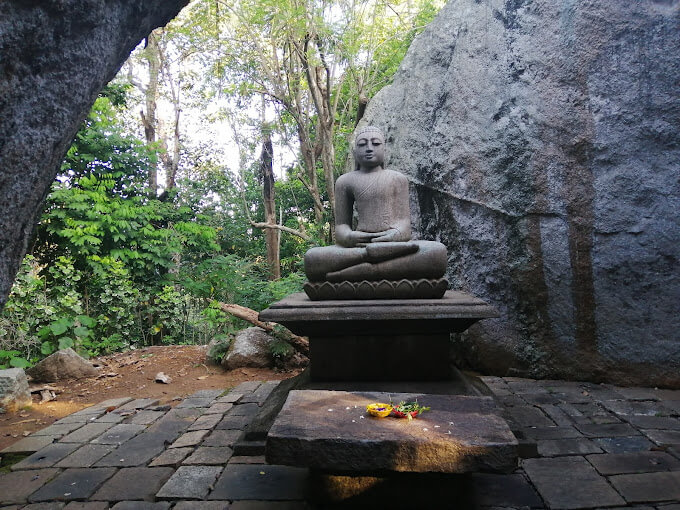
Yatagala Rajamaha Viharaya reaches deep into the island’s Buddhist heritage. Local tradition holds that a sacred Bodhi tree here descends from the revered Jaya Sri Maha Bodhi of Anuradhapura, linking this southern sanctuary to one of the world’s oldest living trees. The temple grew around this venerable presence and the protective granite that shelters it. Over centuries, devotees carved drip ledges into the boulders to keep rain from entering the caves, turned rock faces into gentle guardians, and painted stories of compassion and wisdom across the cave walls.
Inside the main rock‑cave shrine, rich Kandyan‑era murals glow in earthy reds, saffrons, and smoky blues. They tell Jataka tales, frame serene Buddhas with floral scrolls, and set the scene for a reclining Buddha that seems to float within the stone. The art looks intimate rather than grand, and that intimacy gives the temple its warmth. You do not need to know every king and dynasty to feel the continuity here. Offerings, chants, and the footprints of countless pilgrims create a living timeline that includes you the moment you enter barefoot and quiet.
How to Get There
By tuk‑tuk from Galle or Unawatuna
Most visitors reach Yatagala Temple by tuk‑tuk, a ride that takes about 15 to 20 minutes from Galle Fort or 10 minutes from Unawatuna. Negotiate a fare before you hop in, and then settle into the open air as the town recedes behind coconut palms. The driver will turn off the coastal road onto narrow lanes where village life opens like a book—children cycling home, a shopkeeper arranging king coconuts, and egrets stepping through paddy fields that flash green after rain. The final approach curls around granite outcrops, and the temple rises gently into view, a white stupa peeking between trees as if welcoming you without fanfare.
On your own: scooter, bicycle, or bus
If you prefer to arrive under your own steam, rent a scooter or bicycle in Unawatuna. The route rolls through easy hills and offers spontaneous pauses: a roadside stand selling ripe bananas, a lotus pond hiding behind reeds, the shimmer of dragonflies over an irrigation canal. Buses also lumber along the main road from Galle toward Unawatuna and beyond; ask the conductor to drop you at the Yatagala turn‑off and follow signboards inland. However you travel, let the journey unfold slowly, because the small scenes on the way set the mood for the stillness ahead.
What to See and Do
The rock‑cave shrine
Climb the first flight of stone steps, leave your shoes on the rack, and step onto cool rock that keeps the morning’s shadow. Inside the cave shrine, time thins. Oil lamps flicker and lift the gold from painted halos. A reclining Buddha, long and luminous, rests beneath a ceiling of lotus blooms and curling vines. The murals sit close to eye level, so you can trace the brushwork and notice a fade of blue where years of smoke once settled. Keep your voice soft, and move in a slow loop, pausing where the guide ropes allow a better look at the stories unfolding on the wall.
The Bodhi tree terrace
Outside, the sacred Bodhi tree spreads a generous canopy over a stone terrace. Monks and laypeople circle the tree clockwise, murmuring prayers, while flower sellers at the entrance arrange frangipani, jasmine, and lotus on wicker trays. If you wish to make an offering, buy flowers from them and place your garland on the whitewashed altar. The scent of incense rises and mixes with the sweetness of petals. Even the breeze seems to soften here, as if mindful of the leaves that flutter like a thousand small flags of peace.
Climb to the hilltop stupa
Follow another stairway that threads between boulders toward the stupa crowning the hill. The climb is short but steady, and each landing opens a wider view: rice fields stitched with irrigation, rooftops glowing terracotta, and, on a clear day, a thin blade of ocean beyond the treeline. At the top, a clean white dagoba rests under an enormous sky, and prayer flags crackle gently with the wind. Sit on the warm rock and let the landscape wash over you. You will hear mynas gossiping from a palm, a temple bell chiming below, and, now and then, the distant horn of a train ironing the coast toward Matara.
Observe monastic life and daily chanting
Yatagala Rajamaha Viharaya remains a working monastery, so daily rhythms matter. Arrive in the early morning or late afternoon to hear gentle chanting drifting through the courtyards. Monks move with unhurried purpose, and locals bring fruit or sweet rice for almsgiving. You become a respectful guest, welcome to watch and absorb without intruding. These moments give the temple its heartbeat and reveal how sacred spaces live alongside everyday needs.
Photography with respect
Photography is usually welcome in the outer areas, and the textures here reward careful eyes—lichen on old stone, a lacquered door glowing maroon, a stupa curve against monsoon clouds. Inside the cave shrine, ask a caretaker before you take pictures, avoid flash, and never pose with your back to the Buddha. The best frames often happen between scenes: an incense curl lifting past prayer flags, a saffron robe bright against granite, a child solemnly placing a single white bloom at the altar.
Best Time to Visit
Southern Sri Lanka enjoys warm weather year‑round, though the southwest monsoon brings more rain from May to September and the inter‑monsoon season can test umbrellas in October and November. For clear light and easier climbs, December through April usually feels kindest. Early mornings are cool, shadows stretch long across the rock, and birdsong stitches the quiet. Late afternoons offer honeyed light that softens the temple’s white domes and adds drama to the sky from the stupa terrace.
Midday sun can turn the stone hot underfoot, so plan around it when you can. The temple holds a special serenity during light rain as well. Incense smoke thickens to a silk ribbon, leaves drip in gentle rhythm, and the cave shrine’s glow becomes even more intimate. Carry a small umbrella and you might discover why locals linger under the eaves when showers pass through like brief, friendly visits.
Practical Information
Etiquette and dress
As a living Buddhist temple, Yatagala Temple welcomes everyone with respect. Wear clothing that covers shoulders and knees, remove hats and shoes before entering shrines, and keep voices low. Avoid pointing your feet toward Buddha images when you sit. If monks pass, step aside to give space. These small courtesies support a shared atmosphere of care and inclusion.
Fees and hours
There is typically no fixed entry fee, though a donation box near the shrine helps with maintenance and restoration. Bring small notes if you plan to contribute. The temple opens from early morning to early evening, with a midday lull when heat builds and caretakers take their lunch. If you hope to witness chanting, arrive around sunrise or late afternoon, and ask a monk or caretaker about schedules on the day.
Weather, shoes, and safety
The climate stays humid and warm, so carry water and apply sunscreen even on cloudy days. Bare feet and hot rock don’t always match, so step on the mats provided or move between shaded patches when the sun stands high. Watch your footing on wet stone after rain, and keep a friendly distance from monkeys that occasionally scamper across the terraces. They add character to the scene, but they also fancy snacks, so secure your fruit and avoid feeding them.
Nearby Attractions
- Galle Fort: Walk the ramparts, explore artisan lanes, and watch sunset turn the lighthouse gold.
- Unawatuna Beach: Swim in calm waters, then slip into cafés for fresh seafood and king coconuts.
- Japanese Peace Pagoda at Rumassala: Climb for sweeping coastal views and a meditative quiet.
- Jungle Beach: Snorkel in a sheltered cove framed by rocky headlands and jungle shade.
- Martin Wickramasinghe Folk Museum, Koggala: Dive into southern culture, crafts, and rural life.
- Habaraduwa Turtle Conservation projects: Learn about hatchlings and responsible marine encounters.
- Handunugoda Tea Estate (Virgin White Tea): Taste coastal-grown teas and wander the factory floor.
- Koggala Lake: Take a boat to cinnamon islands, watch birdlife, and smell spice drying in the sun.
Travel Tips
Start early to feel the temple at its quietest. A tuk‑tuk from Unawatuna or Galle keeps the journey simple, and drivers often wait for a small fee if you plan a short visit. If you want to linger, ask for a pickup time or save the driver’s number. Bring a light sarong to cover up if your outfit runs beachy, and pack water plus a small bag for your shoes when you move between courtyards.
Buy flower offerings at the small stalls near the entrance, which supports local families and deepens your experience. Keep photography discreet, and switch to a higher ISO rather than using flash in the cave. Drones can disturb worshippers and birds, so leave them behind. A few Sinhala phrases go a long way—ayubowan for hello, stuti for thank you—offered with a smile and a nod.
Combine Yatagala Rajamaha Viharaya with a slow loop through the back roads behind Unawatuna. You will pass cinnamon peeling sheds, lotus ponds, and tiny roadside bakeries steaming with fresh buns; ask for maalu paan if you love savory fish filling. Return to the coast for lunch, or push on to Rumassala for an afternoon walk. A day shaped this way balances sea and stone, bustle and hush.
Conclusion
Some places reveal themselves in a single glance; others, like Yatagala Rajamaha Viharaya, open gently as you slow your step and look closer. The temple’s beauty doesn’t shout. It rests in the way a monk’s chant threads the cave, how a jasmine petal clings to damp stone, and how the view from the hilltop gathers fields, rooftops, and ocean into one easy breath. Come for an hour and you may stay for two, not because there is a checklist to finish, but because the place invites you to listen.
When you walk back down through the boulders, sandalwood on your clothes and a little dust on your feet, the world outside will feel a touch softer. Yatagala Temple lingers like that—a quiet sanctuary near Galle and Unawatuna, rooted in rock and story, ready to welcome anyone who arrives with curiosity and care.