Location & Overview – Where the Temple Sits and Why It Matters
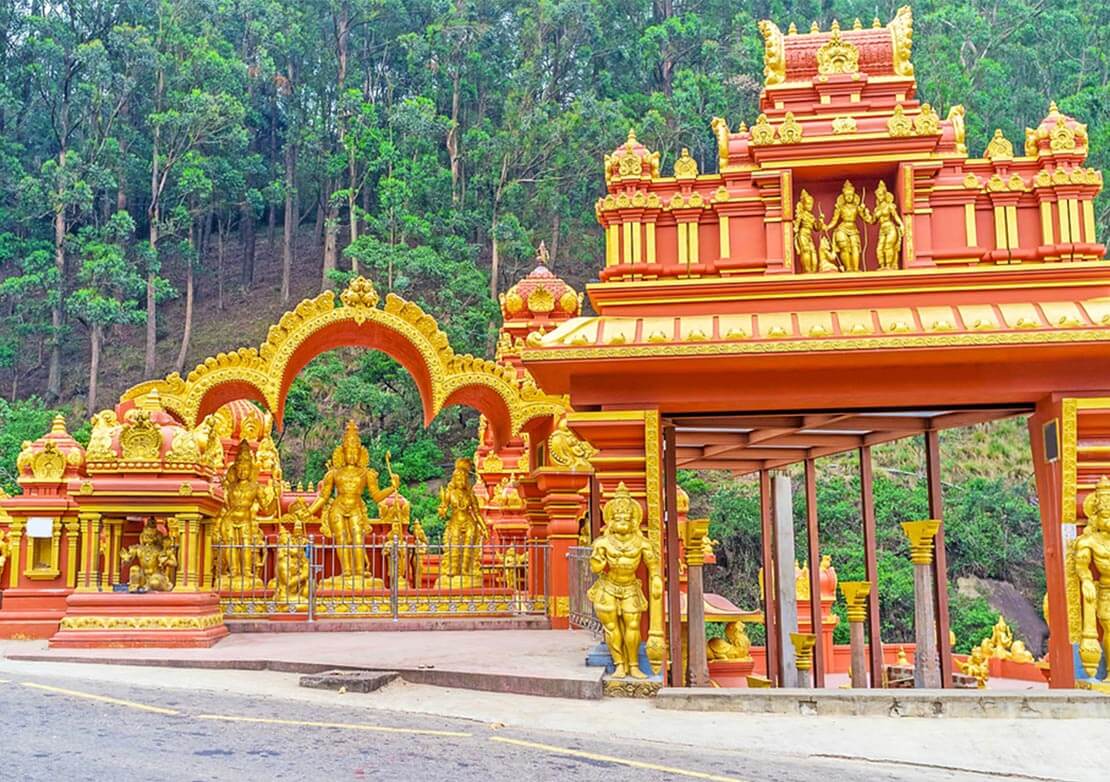
On the winding A5 road that slips out of Nuwara Eliya toward Welimada, a riot of color rises from the mist. The Seetha Amman Kovil, also spelled Sita Amman Temple, sits in Seetha Eliya, just five kilometers from town. Its candy-hued gopuram, studded with sculpted deities and mythic scenes, peers over a gurgling mountain stream and a slope of tea and cypress. Drivers slow down almost instinctively. The temple’s presence feels both theatrical and quiet, like a whispered story you suddenly remember from childhood.
This is one of the most evocative Ramayana sites in Sri Lanka. Pilgrims and curious travelers come for the legend of Sita, but they stay for the atmosphere. The air runs cool even at midday, scented with eucalyptus and woodsmoke from distant kitchens. Bells ring in irregular bursts, and you’ll hear the soft thrum of a drum from the sanctum. The temple welcomes everyone with the same gentle grace. Whether you arrive with folded hands or simple curiosity, the setting draws you in.
Historical or Cultural Significance
Local memory ties Seetha Eliya to the Ramayana’s central heartbreak. According to tradition, this is where the demon king Ravana kept Sita during her captivity, and where she prayed under the trees, longing for rescue. The stream beside the temple carries its own lore. On smooth rocks along the bank, you’ll see shallow depressions that devotees link to Hanuman’s footprints. You feel the story’s weight most keenly here, not in the details you read but in the hush that falls by the water.
The kovil itself reflects South Indian Tamil temple architecture, a living expression of Sri Lanka’s hill-country Hindu community. Over time, masons and painters added tier upon tier of deities to the tower. You’ll spot Rama, Sita, and Lakshmana, and of course Hanuman, his gaze lifted toward the hills. The murals inside portray scenes of devotion and courage. Even if you don’t follow the epic, the iconography tells a clear tale of love, loyalty, and endurance. Rituals here feel intimate. Morning and evening pooja bring flowers, lamps, and rhythmic chants that seem to braid into the mist.
How to Get There
By Road from Nuwara Eliya
Leaving Nuwara Eliya, the A5 threads past Lake Gregory’s shimmering edge, then climbs gently through tea estates and pine stands. Tuk-tuks buzz past vegetable trucks stacked with carrots and leeks from nearby farms. In about 15 to 20 minutes, the temple bursts into view on your right, its colors sharper against the gray-green hills. The ride feels like a prelude—cool wind through the tuk-tuk’s open sides, a quick spray of drizzle, the sweet damp smell of tea bushes after rain.
A tuk-tuk from town usually costs a modest fare and allows you to stop for photos along the way. Buses toward Welimada also pass the temple, though they move on quickly. If you drive, parking sits across the road near small stalls selling coconuts, garlands, and marigolds.
By Train and Taxi
Travelers arriving by train step off at Nanu Oya, the station for Nuwara Eliya. The ride from Kandy or Ella ranks among Sri Lanka’s best, with views of cascading tea and tight valleys patched with vegetable plots. From Nanu Oya, hire a taxi or tuk-tuk to the temple. The route slips through town, then out to Seetha Eliya, where the roadside pines grow tall and straight like sentries.
From Ella or Kandy by Road
From Ella, the drive sweeps past waterfalls and viewpoints. You feel the temperature dip as the road gains altitude, and the light grows softer. From Kandy, you will roll through a patchwork of spice gardens, temples, and tea, with occasional roadside shrines bright with fresh paint. In both cases, the last stretch toward Nuwara Eliya carries that signature hill-country hush.
What to See and Do
Admire the Gopuram Up Close
Start with the tower. The gopuram’s tiers hold a collage of gods, demons, and winged figures, each one painted in coral, turquoise, mustard, and teal. Look for Hanuman mid-flight, his muscles taut and eyes intent. See how artisans shaped the folds of Sita’s sari and the curve of Rama’s bow. Stand quietly, and you can hear the small bronze bell at the entrance chime as visitors arrive.
Step into the Sanctum’s Calm
Remove your shoes and step inside. The floor feels cold against your feet, which can be soothing on a warm day. Incense fogs the air in gentle ribbons. Devotees place trays of jasmine and lotus before the deities, then cup the flame of an oil lamp to their foreheads. The priest moves with steady grace, chanting in a cadence that settles the mind. You can join respectfully—offer flowers, fold your hands, accept a dab of ash or kumkum, and let the ritual wash over you.
Walk to the Stream and the “Footprints”
Follow the path that slopes down behind the temple. The stream runs quick and clear, slipping over smooth rocks flecked with lichen. On a quiet morning, you’ll hear only water, birds, and the soft tap of leaves falling into the current. A small shrine stands near the stones where mark-like depressions lie. Devotees tie threads, whisper vows, and sometimes break coconuts with a crisp crack that startles the monkeys in the trees. Dip your fingers in the water; it bites with mountain chill.
Watch for Monkeys and Birds
Toque macaques often linger near the temple, curious and a little brazen. Keep snacks packed away and enjoy their antics from a distance. Look up for flashes of color—a white-throated kingfisher on a line, a pair of bulbuls skimming the tea rows, and sometimes the dark, glossy Sri Lanka myna perched on a cypress. The wildlife adds to the sense that the temple sits in a living, breathing valley rather than apart from it.
Join a Pooja
If you time it right, attend morning or evening pooja. The drumbeat quickens. Bells ring in bright, overlapping waves. The priest carries a lamp in circles before the deity, and the crowd sways gently, like reeds in a small wind. Even brief participation leaves a glow, a feeling that you touched a story and it touched you back.
Best Time to Visit
Hill-country weather changes quickly, but some months treat visitors especially well. From January to April, mornings often break crisp and clear. Soft sunlight warms the gopuram’s colors, and the stream twinkles like a spill of glass. July and August can also bring long spells of dry, luminous days. Mist adds its romance year-round, especially toward late afternoon, when the temple’s lights bloom against a blue-gray veil.
Arrive early to find calm and space for reflection. The air feels cleaner, the tiles cooler underfoot, and the forest chatter livelier. During festivals—Rama Navami in spring, Thai Pongal in January, and Navaratri in autumn—the temple fills with song and color. Crowds grow large but the joy proves contagious, and the fragrance of incense mingles with ghee lamps and flower garlands in a vivid embrace.
Practical Information
Entry remains free, and donations are welcome. Dress modestly with shoulders and knees covered. Bring a light shawl or scarf and a pair of socks if the tiles feel too cold. You will remove shoes and hats before entering, and photography usually stays restricted inside the sanctum. Ask first, and disable flash anywhere near worshippers.
Nuwara Eliya’s altitude keeps temperatures cool compared with the lowlands. Expect daytime highs between 14 and 20°C, with evenings turning brisk. Rain can arrive fast, so carry an umbrella or a compact rain jacket. Pooja times vary, but morning rituals often begin soon after sunrise, with another round near sunset. If you wish to make an offering, buy flowers or coconuts from the stalls across the road and hand them over at the entrance desk.
Nearby Attractions
- Hakgala Botanical Garden – A few minutes down the road, this historic garden mixes Himalayan trees, orchids, and roses framed by steep ridges.
- Pedro Tea Estate & Factory – Tour a working tea factory, then sip a strong BOPF with views over serried rows of bright green leaves.
- Gregory Lake – Walk the promenade, hire a paddle boat, or watch clouds drift low over cedar-lined lawns.
- Lover’s Leap Waterfall – A short hike leads to a plunging fall and a grand view over Nuwara Eliya’s patchwork fields.
- Moon Plains (Sandathenna) – Drive the loop road to a sweeping 360-degree lookout, where wild sambar graze at dawn.
- Ramboda Falls – A scenic stop on the A5, with cool spray and tea kiosks perched over the valley.
- Horton Plains National Park – An early start rewards you with World’s End cliffs, montane grasslands, and cloud forests alive with birds.
- Ambewela Dairy Country – Rolling meadows, mist, and a different side of hill-country agriculture.
Travel Tips
Carry small notes for donations and offerings. A reusable shoe bag helps when you leave your footwear at the entrance. Keep a respectful distance from ongoing rituals, and step aside when devotees carry trays or lamps. If you plan to photograph, focus on the exterior and the stream area, and always ask before capturing people. The temple welcomes visitors of all faiths and backgrounds, and simple courtesy goes a long way.
Layer up. The weather swings between sunny and chilly, and rain can sweep in suddenly. If you explore the stream bank after showers, watch your footing on slick rocks. Leeches appear on wet days near the undergrowth; closed shoes and a dab of repellent handle that easily. Avoid feeding monkeys for your safety and theirs. If you arrive by bus, signal early for the stop at Seetha Eliya, as the driver can miss it in mist. A tuk-tuk from Nuwara Eliya remains the most flexible option, and the driver often knows the best roadside viewpoints for quick photos.
A simple “Vanakkam” makes a warm greeting here. If a priest offers prasadam—sweet or fruit—accept it in your right hand or both hands together. Keep the temple grounds clean, pack out any plastic, and leave the place as calm as you found it.
Conclusion
Seetha Amman Kovil rewards unhurried attention. You come for a legend set among the clouds, and you meet a living place of prayer on a hillside of tea. The stream keeps talking, even when voices fade. Monkeys skitter through the trees, and bells bloom in the mist like soft lanterns of sound. Stand by the gopuram and look toward the ridge. You may not see all the story’s heroes, but you feel their echoes travel on the wind.
When you leave, the colors linger. So do the smells of incense and damp earth, and the memory of a priest’s gentle cadence. The temple sits close to town, yet it opens a door into a quieter world. If the hill country is Sri Lanka’s breath, then Seetha Eliya is one slow, thoughtful exhale. Give it a morning, give it your presence, and carry the stillness with you as you wander on.