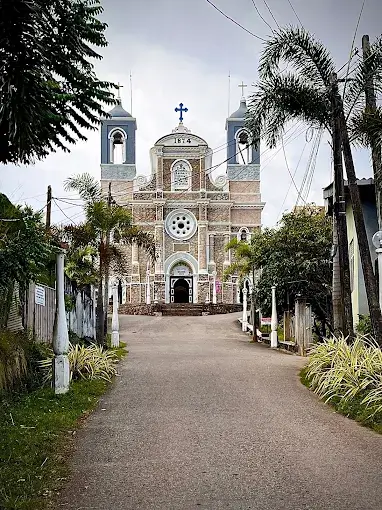
St. Mary’s Cathedral Galle feels like a deep breath amid the city’s salt air and busy lanes, a quiet sanctuary where carved wood, filtered light, and soft hymns carry stories across time. Step inside and the heat of the coast drops away, replaced by the cool hush of a living church. You hear bells travel through palm fronds and tiled roofs, and you catch the fragrance of wax and frangipani. This is not only a place to photograph and leave. It is a place to linger, listen, and meet the soul of Galle beyond the ramparts.
Location & Overview – place is located and why it is significant
St. Mary’s Cathedral Galle stands within the city proper, only a short tuk-tuk ride from Galle Fort and the railway station. Many travelers explore the fort first, then cross to the cathedral to see another layer of the city. Outside the fort’s Dutch-era grid, the streets turn more local and lived-in, with uniforms of schoolchildren bright against shopfronts and fruit stalls. You can reach the cathedral along shaded roads that rise gently away from the ocean, where the breeze thins and the cadence of the city slows.
Its significance rests on more than its size or age. This is the seat of the Roman Catholic Diocese of Galle and a spiritual home for diverse communities who share pews and prayers in Sinhala, Tamil, and English. The building offers a graceful blend of European ecclesiastical design and Sri Lankan details, from its vaulted interior to the red-tiled roofs nearby. For travelers, the cathedral becomes a lens through which to see Galle’s plural history, where Portuguese missionaries, Dutch merchants, and British administrators once moved through the same streets as today’s fish sellers and bus conductors.
Historical or Cultural Significance
Catholicism arrived in Sri Lanka with the Portuguese in the sixteenth century. The coast, including Galle, saw new chapels rise and then struggle through the Dutch period, when Catholic practice survived quietly in homes and hidden corners. With the British came greater religious freedom and, by the late nineteenth century, the building of larger churches informed by European plans yet adapted to local climate and craft. St. Mary’s Cathedral Galle emerged from that turn, its broad nave catching the coastal light and its wooden fittings worked by local hands.
Today, you can feel that layered past in the rhythm of worship. Parishioners light candles before a statue of Mary, Queen of the Rosary, while a ceiling fan hums above them. A choir practices an old hymn one moment and a Sinhala setting the next. Families arrive together and greet friends with an ease that breaks down the wall between visitor and local. Culture lives not only in the stones or stained glass, but in these weekly rituals and the way voices weave through languages without losing harmony.
How to Get There
The journey sets the tone. If you come by train from Colombo, choose a window seat on the left side for the coast. The line traces the shore, and you watch foam bloom against black rocks as palm groves flicker by. Vendors hop on with cut mango and salted peanuts, and the conversations in your carriage turn into a rolling chorus of Sinhala, Tamil, and English. When you reach Galle, the station spills you into a plaza of buses, tuk-tuks, and sea wind, with the fort walls to your right and the city stretching inland.
From the station or the fort’s main gate, a tuk-tuk reaches the cathedral in about ten minutes, depending on the day’s traffic and school hours. Negotiate the fare with a smile and a fair number in mind, and you will glide through streets where tailor shops sit beside tea stalls. Look through the open fronts of barbers where men chat under spinning fans. You can also walk from the fort if the sun feels kind. The route takes about twenty minutes, and it brings you past spice sellers, old villas with peeling pastel paint, and the glow of ripe rambutan piled like red fireworks.
Approach the cathedral slowly. Bells may sound as you near, or a hush may settle if a service has begun. The facade appears between trees and telephone wires, steady and pale against the high sky. It invites rather than demands, and that welcome suits Galle well.
What to See and Do
Step inside and pause under the doorway to let your eyes adjust. The nave stretches ahead with clean lines and a soft, maritime light. High windows lift the gaze, and tiled floors cool your feet through your shoes. If sunshafts angle through the stained glass in the morning, dust motes float like a light rain of gold. Slide into a pew near the middle to take everything in, from the timber ceiling to the altar’s carved details.
Admire the stained glass when the sun arcs to the right. The colors taste of tropical fruit—papaya orange, lime green, pomegranate red—though they depict holy figures, lilies, and stars of the rosary. The glass throws patches of color onto whitewashed walls, so the whole church shifts with the passing hour. Move quietly along the side aisles to find small chapels where candles tremble in the coastal breeze.
Listen as much as you look. On many days, you may hear a rosary group pray in Tamil while two schoolboys practice harmonies in the back row. The sound of a broom against old tile sets a gentle beat for it all. If you visit on a Sunday, arrive early for the main Mass. The choir blends Sinhala and English hymns, and the organ joins with a simple dignity. If you do not share the faith, you are still welcome to sit, observe with respect, and let the service reveal a living tradition.
Step outside to the courtyard after your visit. A frangipani tree shades a Marian grotto where people leave flowers, notes, and promises. You might see a woman in a sari strike a match and watch the flame steady before she bows, children tugging at her sleeves with the restlessness of a warm morning. From here, walk the perimeter of the property. A side gate frames a view across rooftops toward the fort and the sea beyond, and that layered skyline tells the story of Galle at a glance.
On feast days, particularly in October for the Rosary, the cathedral comes alive with processions. Parishioners carry a statue of Mary through nearby lanes, white-clad altar servers ring handbells, and vendors sell garlands that scent the air with jasmine. If your travel dates align, you will witness a tender mix of pageantry and neighborhood pride.
Best Time to Visit
Galle rests on Sri Lanka’s southwest coast, so the dry season from December to March offers the gentlest weather. The air feels lighter and the sky steadier, which gives the cathedral’s interior a clear, steady light. Early mornings glow with a soft warmth, and late afternoons bring golden angles that turn the stained glass vivid without harsh glare.
The southwest monsoon usually runs from May to September. Showers can roll in hard and fast, and they drum on the roof with a music that suits the space. If rain meets your visit, step inside and enjoy the soundscape as the scent of wet earth and wax rises. April and November often act as shoulder months, with mixed days that still reward early starts and flexible plans. If you prefer smaller crowds, weekdays outside school holidays feel quieter and more contemplative.
Practical Information
Entry to St. Mary’s Cathedral Galle is free. Donations help maintain the building and support parish outreach, so consider placing a contribution in the box near the entrance. Services usually take place on Sunday mornings and some weekday evenings. Times may change for feast days, so check a recent schedule through the parish office or ask a local driver to call ahead.
Dress modestly to respect worshippers. Cover shoulders and knees regardless of gender, remove hats at the door, and keep phones on silent. Photography is welcome in many areas, yet avoid flash and never photograph people in prayer without permission. If a service is in progress, wait until it ends before moving around the aisles.
The coastal climate stays warm and humid. Carry water and a light scarf or shawl to adapt to sun and breezes. Inside the church, fans move the air but the day can still feel heavy. Sandals suit the heat, though closed shoes feel steadier on the old tiles. The cathedral sits in a safe, central part of town. Normal city awareness is enough, and friendly directions come easily if you ask.
Nearby Attractions
- Galle Fort: A UNESCO-listed enclave of lanes, bastions, and sea views that pairs beautifully with a cathedral visit.
- Galle Lighthouse and Flag Rock Bastion: Sunset here wraps the day in apricot light, with waves striking the rocks below.
- Dutch Reformed Church (Groote Kerk): A calm, historic church with old tombstones set into the floor and a famous organ loft.
- All Saints’ Church: An Anglican gem with Gothic touches, stained glass, and a cool hush similar in spirit to the cathedral.
- National Maritime Museum: Exhibits on shipwrecks and sea trade that explain why Galle mattered to so many empires.
- Old Dutch Hospital Precinct: Cafes and boutiques in a restored complex, perfect for a cool drink after your visit.
- Unawatuna Beach: A short ride away for a swim, a snack of isso vade, and a curve of palm-framed sand.
- Japanese Peace Pagoda (Rumassala): A white stupa on a hill with wide views across the bay and a serene walking path.
Travel Tips
Arrive early. The cathedral feels most luminous in the first hours after sunrise, when the light slants and the air still holds the night’s cool. If you plan to photograph, keep your movements minimal, shoot from the sides, and wait for pauses between prayers. The best images often happen when you listen first.
Combine your visit with a slow walk through Galle Fort. Start with the cathedral, then wander back for a late breakfast under a ceiling fan, and return to the ramparts by sunset. This sequence gives your day a beautiful arc from quiet contemplation to ocean drama.
Bring small bills for donations and tuk-tuks. If a driver waits for you during Mass, agree on a fair price before you go inside. Many drivers know service times and will suggest alternatives if the cathedral hosts a special event.
Learn a few words. “Ayubowan” or “Kohomada?” in Sinhala, and “Vanakkam” or “Eppadi irukkirirgal?” in Tamil, open doors and smiles. Respect makes every conversation warmer, and this city responds kindly to it. If you speak with the caretaker or a parishioner, ask about the windows or an old statue. Stories unfold with patience and genuine interest.
Finally, plan for weather. A compact umbrella and a light cotton layer will cover most needs. If rain falls, don’t rush off. The cathedral changes with the weather, and a rainy visit brings its own soft beauty.
Conclusion
St. Mary’s Cathedral Galle holds a stillness that stays with you long after the bells fade. It shows how faith adapts and endures, how architecture breathes differently in a tropical light, and how communities sing together across languages. When you step back into the street, the world brightens—vendors call, scooters purl, and the sea glints between rooftops—yet some of that calm travels with you. In a city praised for its fort walls and ocean views, this cathedral offers a gentler landmark, one you feel rather than conquer. Visit with respect and time, and you will leave with more than a memory. You will carry a sense of Galle’s heart.