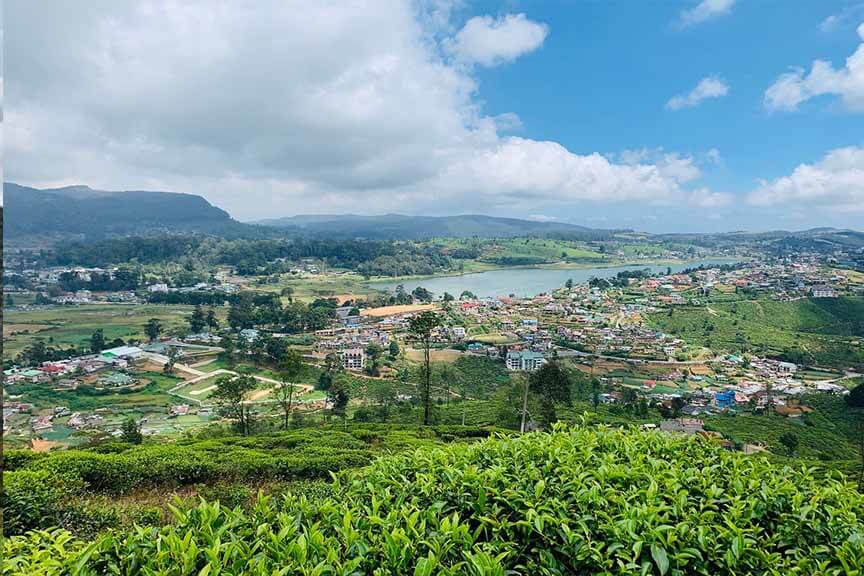
Dawn in Nuwara Eliya feels like a whispered promise. Mist hangs low over tea gardens, dew beads on glossy leaves, and the smell of damp earth drifts on a chill breeze that wakes the senses. Above the tiled roofs and shimmering blue of Gregory Lake, a green shoulder rises gently toward a sky that often changes its moods by the hour. This is Single Tree Hill, a beloved viewpoint and an easy hike that rewards you with sweeping panoramas, soft birdsong, and the quiet rhythm of tea country life. It’s the sort of place where you slow your step, breathe deeply, and let the landscape tell its story.
Location & Overview – Where Single Tree Hill Is and Why It Matters
Single Tree Hill sits just above Nuwara Eliya town in Sri Lanka’s Central Highlands, a cool-climate plateau famous for its emerald tea estates and old colonial charm. The hill crowns the southern rim of the valley, rising to roughly 2,100 meters and offering one of the easiest access points to a high, sweeping view. From here, the land looks like a quilt: rows of tea bushes stitched across slopes, laced with streams, lanes, and the slate-blue shimmer of the lake. On clear mornings, you can pick out Pidurutalagala, Sri Lanka’s highest peak, and the undulating shoulders of Kikiliyamana. Some days, even the sacred outline of Adam’s Peak (Sri Pada) winks on the horizon.
Locals love this hill for the gentle walk and the perspective it gives on daily life. You watch tea pluckers move in graceful lines, hear the tuk-tuk horns drifting up from town, and feel the soft nudge of cloud as it sweeps over the ridge. Travelers prize it because it offers big rewards for modest effort. You can start after breakfast and still be back for a hot cup of Ceylon tea by mid-morning, or set off before sunrise to watch the sky color above folds of green.
Historical or Cultural Significance
The name “Single Tree” comes from an old landmark that once marked the summit: a lone tree leaning against the wind. Over time, more trees grew, a small shrine appeared, and a hilltop path became a local ritual. While Single Tree Hill isn’t a historical fortress or ruin, it belongs to a living heritage shaped by tea. The surrounding estates, cultivated since the 19th century, still define the economy and the identity of the region. Workers’ songs, the rustle of sacks, and the scent of fresh leaf bring the story of tea to life as vividly as any museum.
Near the base, you will often find a small Buddhist temple and a white stupa set among pines and eucalyptus, where villagers pause to offer flowers and light oil lamps. If you pass at dawn, you might hear a chant on the breeze. Respectful gestures—such as covering shoulders, removing hats, and speaking quietly—go a long way here. This is a hill where spirituality blends with the everyday, where the path you walk is the same one used by school children, tea pickers, and neighbors carrying bundles of greens for lunch.
How to Get There
Arriving in Nuwara Eliya
Most travelers reach Nuwara Eliya via the scenic Kandy–Ella railway, a ribbon of track that glides past waterfalls, forests, and endless waves of tea. Disembark at Nanu Oya station, where the air feels cooler and the colors sharper. From the platform, a tuk-tuk ride of 20 to 30 minutes brings you into town over winding roads lined with eucalyptus and cypress. You could also arrive by bus or private car from Kandy, Hatton, or Ella. The roads curve and climb, yet the views repay every bend with valley vistas and distant peaks.
The Final Approach to Single Tree Hill
From Nuwara Eliya town, head toward Gregory Lake and follow signs or local advice for Single Tree Hill Road. The lane narrows into an estate track, with hedges and tea bushes pressing close. If you’re in a tuk-tuk, the driver will usually drop you near the temple or at a point where the track steepens. From there, a footpath threads between waist-high tea shrubs with tiny green and bronze leaves that smell faintly of lemon when the sun warms them.
The walk takes 30 to 45 minutes at an easy pace. You climb gently, occasionally stepping over tea-terrace runoffs, while friendly estate dogs trot part of the way before losing interest. The path passes a few workers’ line rooms and opens onto viewpoints where the town shrinks below, its red roofs clustered around the lake like toy houses. A soft wind moves through pines, and you may notice the peppery scent of eucalyptus. With every turn, the horizon widens until the summit meadow pulls you forward with a promise of broad sky.
What to See and Do
Catch Sunrise or a Clear Morning View
If you climb in the blue hour before dawn, carry a small torch and a warm layer. The hilltop often greets you with cold air and a hush broken only by crickets and a distant rooster. As the sky lifts from ink to rose, the tea fields brighten in slow motion. Gregory Lake turns from gray to silver, then to sparkling blue. When the sun crests, ridgelines stack like paper cutouts, and the day begins with photos that need no filters.
Walk Through Working Tea Country
The joy of Single Tree Hill lies in the approach. You walk through living, breathing estates where women in bright headscarves chat as they pluck two leaves and a bud with swift, practiced hands. Step aside when baskets pass, offer a greeting, and avoid straying off paths into the bushes. The rhythm here is steady and kind. You may learn a few Sinhala or Tamil phrases, exchange smiles, and continue upward with a better understanding of the work that shapes your morning cup.
Pause at the Shrine and Breathe
Near the top, a small shrine sits at the edge of the clearing. Locals stop to bow, tie ribbons, and whisper wishes. Even if you don’t share the faith, the quiet encourages reflection. Sit for a minute. Listen to the wind in the pines. Notice how the clouds roll in and part again, revealing new angles of the same hills. It’s a gentle reminder that the landscape always shifts, and your perspective can too.
Photograph the Panoramas
From the summit, the view arcs from the high bulk of Pidurutalagala to the patchwork roofs of Nuwara Eliya. On clear days, the line of peaks to the west draws the eye, with faint ridges guiding your gaze toward Adam’s Peak. Photograph wide to capture the sweep, then switch to details: a tea picker’s basket against the green, a glint of sun on water, a line of eucalyptus framing the lake. Morning light works magic, though the late afternoon can paint the hills in gold when the mist lifts.
Pack a Picnic and Linger
The summit meadow makes a fine picnic spot. Spread a small cloth, sit against a rock, and savor fresh bread, local dairy, or just a thermos of hot tea. Keep food sealed to avoid tempting curious dogs, and collect every wrapper. Minutes drift easily here. The longer you stay, the more you notice: tiny butterflies dancing over the grass, swallows looping through the air, and the low thrum of town life below.
Best Time to Visit
The Central Highlands enjoy cool weather year-round, but Single Tree Hill shines brightest from December to April, when mornings often break clear and dry. In these months, you can set out early and watch the sun cast clean shadows across the tea. March and April bring a festival buzz to Nuwara Eliya, with flowers in bloom and crisp, cloud-sculpted skies that reward photographers and walkers alike.
Monsoon patterns shift, yet May to July and October to November tend to be wetter, with mist and short, moody showers. If you come then, you still find beauty: rain-slick leaves, cinnamon-scented earth, and a private hilltop with few visitors. Start early in any season, because by late morning the clouds usually gather. Sunrise to mid-morning remains your best window for uninterrupted views and the softest, most forgiving light.
Practical Information
There’s no formal entry fee for Single Tree Hill. If you pass a small temple on the route, a voluntary donation is welcome. Parking is limited on the estate tracks, so arrive by tuk-tuk or on foot when possible. Wear sturdy shoes with grip, because the path can be slick after rain. Bring a light jacket, since temperatures at the top often hover between 10°C and 18°C, and wind can drop the “feels-like” number further.
Leeches may appear during very wet spells, especially along shaded edges, so long socks or a dab of repellent around ankles helps. Carry water in a reusable bottle and a small snack, and pack out everything you bring. Dress modestly if you plan to step into the temple area, and ask before photographing people. Drones are better left at your hotel unless you’ve secured permission, as estates and communications sites have restrictions. Mobile signal is generally fine near town, but it can flicker near the summit, so save offline maps in advance.
Nearby Attractions
- Gregory Lake: Paddle a swan boat, stroll the lakeside promenade, or sit with a tea and watch clouds skid across the water.
- Victoria Park: A pocket of manicured lawns and flowerbeds, ideal for an afternoon walk among roses and tall, old trees.
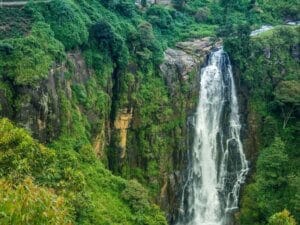
- Pedro Tea Estate and Lover’s Leap Viewpoint: Tour the factory to see withering, rolling, and firing in action, then continue to a lookout over a dramatic cascade.
- Moon Plains (Sandathenna): A flat, high meadow with a 360-degree viewpoint, frequented by deer and threaded by breezes.
- Hakgala Botanical Garden: Terraced gardens bursting with orchids, ferns, and towering conifers that scent the air with resin.
- Seetha Amman Temple: A colorful riverside shrine linked to the Ramayana, with a stream and quiet grove for reflection.
- Galway’s Land National Park: A compact birding hotspot where sunbirds, bulbuls, and warblers flit through montane forest.
- Ambewela and New Zealand Farms: Rolling pastures, dairy tours, and a countryside vibe that feels a world away from city noise.
Travel Tips
Start early for clear skies and fewer people. Check the forecast the night before, because cloud cover can move in fast. If you plan to catch sunrise, bring a headlamp and tell your hotel your plan. Hire a tuk-tuk to the trailhead to avoid backtracking through town and to minimize parking hassles. Estate roads are narrow and can be muddy after rain, so small vehicles handle them best.
Keep interactions warm but respectful. A simple “Ayubowan” (Sinhala) or “Vanakkam” (Tamil) opens conversations, and people often respond with generous smiles. Step aside for workers carrying heavy loads, and avoid walking through tea bushes, because the plants and the ground beneath them are delicate. Carry small notes for temple donations or a quick snack at a nearby stall, since card machines are uncommon around the estates.
For clothing, think layers: a breathable base, a warm fleece, and a light waterproof shell. The sun can be fierce when it breaks through, so a hat and sunscreen help, even on cool days. Photographers should bring a microfiber cloth for mist and a spare battery that prefers the cold. If you’re traveling with children, the route’s gentle gradient suits them well, though handholding near steep edges remains wise. Finally, keep your senses open. Listen for the chuckle of a stream, breathe the green scent of tea, and notice how the light plays across every leaf.
Conclusion
Single Tree Hill doesn’t demand much from you—just a slow climb and an open heart—and it gives back more than you expect. Up there, the world feels both wide and welcoming, with valleys stretching away and the daily life of Nuwara Eliya unfolding like a tapestry below. You learn how many shades of green exist, how wind can carry a hint of lemon from a crushed tea leaf, and how the sky writes its own stories across a highland morning. Whether you come for a single sunrise or return every day of your stay, the hill meets you in a different mood each time. Step onto the path, follow it between the bushes, and let the landscape guide your thoughts. By the time you descend, the tea will taste richer, the town will feel friendlier, and the quiet beauty of Sri Lanka’s high country will have settled gently into your memory.