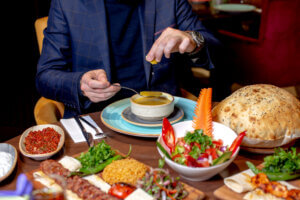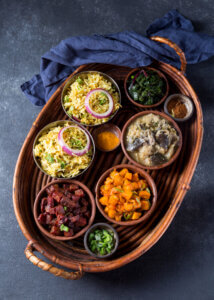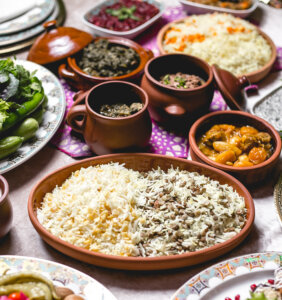
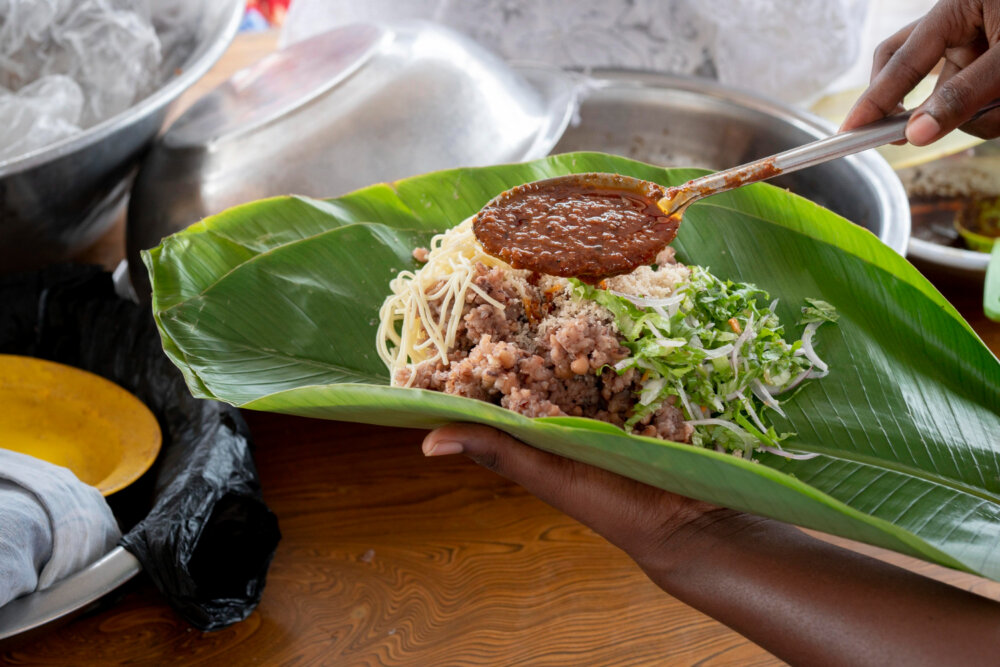
When a banana leaf lands before you in Sri Lanka, the room changes. Steam rises like a blessing, coconut and curry leaf drift through the air, and chatter softens to a hum of anticipation. I grew up watching aunties arrange rice and curry on glossy green leaves with a precision that felt tender, not strict. The leaf warms. The rice breathes. Fingers mix heat and spice into a personal rhythm. And with that first mouthful, the land itself seems to speak. A Sri Lankan banana leaf meal is food, yes, but it is also ritual, memory, and the oldest kind of hospitality—nature’s plate carrying the island’s heart.
From Past to Plate
Long before polished plates and polished menus, our elders turned to the garden. The banana, with its broad, pliant leaf, offered a cool, clean surface that could cradle a feast. It traveled well to fields and fish markets, and it returned to the soil without a trace. In Tamil homes, this tradition is called “elai sapadu,” while in Sinhala kitchens we say “kesel kole bath.” At temple almsgivings, village weddings, and festival street feasts—our famous dansals—this leaf has always gathered families, neighbors, monks, and travelers in the same soft green embrace.
Colonial eras arrived, tastes shifted, and still the leaf held on. It took on new forms, too: lamprais, a Burgher classic, wraps rice and slow-cooked accompaniments in banana leaf, then bakes it until fragrance deepens. In Jaffna, the leaf hosts vegetarian spreads bright with spices and lentils. In the hill country, you’ll find trays lined with leaf for everyday rice and curry. Through it all, the banana leaf remained a bridge between past and present—sturdy, aromatic, and humble, yet quietly grand.
Ingredients or Key Elements — essential components or cultural building blocks
The Leaf
The star looks simple but carries power. A fresh, unblemished banana leaf gets rinsed, wiped, and gently heated to release oils and deepen color from jade to glossy emerald. The moment it warms, it perfumes the room with a grassy, nutty scent and softens to a silky sheen that won’t snag rice. That subtle aroma clings to every grain.
The Rice
We use fluffy white rice for daily meals, sometimes parboiled rice for a nuttier bite, or red rice for a wholesome chew. Each grain should stand clear, never mushy. Rice anchors the meal, a quiet hill on the leaf that everything else leans toward.
The Curries and Companions
Balance matters. A banana leaf meal brings spice, sour, sweet, crunch, and calm in one circle of flavor. You might meet:
- Parippu (dhal) simmered in coconut milk with turmeric and a temper of mustard seed and curry leaves.
- Pol sambol, a bright coconut relish with lime, chili, and often a hint of Maldive fish—vegetarians, do ask.
- Mallung (mallum), fine-chopped greens tossed with coconut, lime, and a kiss of heat.
- Fish ambul thiyal, black-peppery and sour with goraka, or a peppery chicken curry (kukul mas).
- Polos, young jackfruit in a rich, smoky curry that eats like a tender stew.
- Wambatu moju, sweet-sour eggplant shimmering with onion and spice.
- Papadam, fried chilies, and a little achcharu pickle for crunch and sparkle.
No two leaves look identical, because no two families balance flavors the same way. That is the beauty—your meal becomes a conversation on a leaf.
Preparation or Practice — vivid step-by-step feel, sensory process
Morning begins with the hiss of mustard seeds. A spoon hits a hot pan, curry leaves crackle, and the kitchen fills with the sweet smell of onions turning golden. Coconut milk slides into the pot like silk. Turmeric blooms. Pandan and lemongrass whisper in the steam. Meanwhile, rice sputters, lid trembling, as the grains swell and settle.
Someone lights the stove to prepare the leaf. The flame licks the surface quickly, and the color shifts as oils wake up. Run your palm over it—warm, smooth, no tough veins to fight the rice. We cut rectangles that fit a lap or a small table, and sometimes we double-layer for strength. Then the choreography begins.
We mound rice at the center. Not too much; we respect appetite and avoid waste. Dhal finds its place at one side, soft and comforting. Curries circle like a festival procession—sour near the rich to balance, crunchy beside the tender for contrast. A spoonful of pol sambol glows red-orange. A shard of papadam stands tall like a sail. If lamprais is the feast, we wrap and bake the leaf-wrapped parcel, and the kitchen starts to smell like smoked spice and banana bark.
Finally, we sit. Fingers—right hand for tradition and hygiene—move rice, curry, and sambol together in small, neat bites. The leaf warms your palm as you mix. Your nails catch the fragrance of roasted coconut. Each bite changes slightly, guided by your rhythm, your mood, your personal balance of heat and sweet.
Symbolism or Local Meaning — cultural, emotional, or spiritual significance
The banana leaf teaches generosity. It spreads wide, welcomes plenty, and leaves nothing behind but compost. We serve on leaf to honor the earth and to honor each other, especially during almsgivings, harvest blessings, and festival days when community matters most. Families gather shoulder to shoulder, and the leaf becomes a shared language that includes elders, children, neighbors, and guests from far away.
There is also a quiet mindfulness. Placing each curry around rice isn’t just practical; it expresses gratitude and balance. We value variety and harmony, not excess. When the meal ends, many of us fold the leaf over the remains to show respect for the food and the hosts. Customs vary by region and household, yet the heart remains the same: eat well, waste little, and leave the space kinder than you found it.
Where to Experience It — restaurants, villages, festivals, local venues
For a daily taste, step into a neighborhood “hotel” (our word for humble eateries) at midday. A server will sweep out with a banana leaf, rice, and a lineup of curries that change with the season. Ask what is fresh and local that day; you will likely eat better than any menu promises.
In Colombo, several traditional restaurants offer banana leaf rice and curry, while village-style spaces recreate rural flavors under thatch and shade. Along the south coast, family-run spots near the markets serve leaf meals with fish just off the boats. In the hill country, tea estate towns sell warm lunchtime parcels wrapped in leaf that travelers tuck into on buses and trains.
For festival magic, find a dansala during Vesak or Poson, when volunteers serve free meals on leaves to anyone who comes with an open heart. In the north and east, Tamil celebrations often feature grand vegetarian leaf spreads. And if you are invited to a home for an almsgiving or a life milestone, accept with gratitude—you will meet the most meaningful leaves there.
Tips for Travelers — etiquette, authenticity tips, do’s & don’ts
- Wash your hands before and after. Most places offer a basin or a jug of water.
- Use your right hand to eat. If you prefer cutlery, ask kindly; hosts understand and will accommodate.
- Start with small servings. You can always accept more; our people love to share second helpings.
- Mix rice and curry gently with your fingertips, then push bites with your thumb. Keep it tidy; it’s an art, not a race.
- Check for Maldive fish in sambols and curries if you eat vegetarian or halal. Staff will gladly guide you.
- Spice levels vary. Ask for milder options or extra dhal to soften heat.
- Finish respectfully. Fold the leaf over your leftovers to keep things neat, and thank your hosts—“istuti” in Sinhala or “nandri” in Tamil.
- Support small vendors and community kitchens. Your meal helps families and preserves traditions.
Conclusion — reflective, sensory, and emotionally resonant
When I think of our island, I picture a green leaf shining under kitchen light, the room vibrating with clinks, laughter, and the soft rustle of steam. A banana leaf meal binds us to land and to each other—farmers who grew the greens, fishers who braved dawn swells, cooks who stirred sweetness into spice. You feel that care in every mouthful. The flavors linger, but so does the warmth of shared space and easy conversation. If you come to Sri Lanka with curiosity, sit down to a banana leaf meal. Let the leaf cradle your rice and your story. You will carry the scent of it long after the last grain is gone, and you will understand a little more of who we are.
Continue Reading
-
Port City & Colombo Food Evolution
I grew up where the wind smells of salt and cardamom, between the stubborn waves of the Indian Ocean and…
-
Jaffna Festivals & Food: Yal Panam Traditions
In Jaffna, which elders still call Yal Panam, the seasons taste of smoke, salt, and song. The mornings wake to…
-
Colombo Fine Dining Guide : Restaurants & Signature Dishes
Evenings in Colombo carry a soft salt wind from the ocean, the kind that curls into alleys scented with cinnamon…