Just inland from the bustle of Galle, the Kottawa Reserve Forest unfurls like a green tapestry woven with mist, birdsong, and the scent of rain-soaked leaves. Tucked along the Udugama road, this pocket of lowland rainforest sits less than an hour from the coast, yet it feels worlds away from the salty breezes and colonial ramparts. Locals know it as a gentle, living classroom—an accessible slice of Sri Lanka’s wet-zone rainforest where rare plants, shy reptiles, and a chorus of endemic birds find refuge beneath a dense canopy.
Visitors step through the modest forest gate and into filtered light where ferns glow electric green and moss beads along buttressed trunks. The ground stays springy underfoot with years of leaf fall, and every breeze shakes down a faint drizzle of dew. Unlike the sprawling reserves deeper inland, Kottawa’s trails are compact and friendly, perfect for travelers who want a taste of rainforest magic without a full expedition. This is a place to slow down, to listen carefully, and to let the forest reveal its subtleties one rustle and ripple at a time.
Kottawa’s significance lies not only in its biodiversity, but also in its proximity to the south coast’s cultural and beach hubs. Many travelers base in Galle or Unawatuna, dip into Kottawa for a morning’s wander, and return with a new vocabulary: dipterocarps, drongos, lianas, and coucals. The reserve safeguards fragments of a once-vast habitat that sheltered species now found only in Sri Lanka. Step by step, you encounter this wonderland in miniature—strangler figs looping like sculptures, butterflies pirouetting in dappled light, and tree trunks tattooed with lichens in every shade of green and grey.
Historical or Cultural Significance
Rainforests like Kottawa once blanketed much of Sri Lanka’s southwest. Over centuries, cinnamon, tea, and rubber plantations carved out the hillsides, threading estates and villages between the remaining wild pockets. Kottawa survived through careful management by the Forest Department and the everyday respect the surrounding communities show for the trees, water, and creatures that share their home. For locals, the forest acts as a water tower and a weather-maker; when the forest thrives, the streams run clear and the frogs sing.
The small arboretum near the entrance bears quiet witness to this stewardship. Trails loop past labeled trees, a nod to the reserve’s long role in education and research. You can read the names, roll the syllables on your tongue, and then tip your head back to match each label to towering crowns. School groups arrive on weekday mornings, chattering until the forest hushes them. Guides, many from nearby villages, share lore with humor and patience—how to tell a creeper from a climber, or why the green vine snake vanishes when you stare straight at it.
How to Get There
By public transport
From Galle, hop on a bus bound for Udugama and watch the scenery shift from tiled roofs and roadside fruit stands to cool, damp hills lined with pepper vines and cinnamon. The bus hums, the air grows sweeter and earthier, and vendors climb aboard with still-warm “short eats” in paper sleeves. Ask the conductor for the Kottawa stop, and you’ll step down near a lane that curls into the trees. A friendly tuk-tuk driver usually waits nearby, ready to bump you the last minutes to the forest gate while you breathe in the green smell that signals rain even on sunny days.
By car or taxi
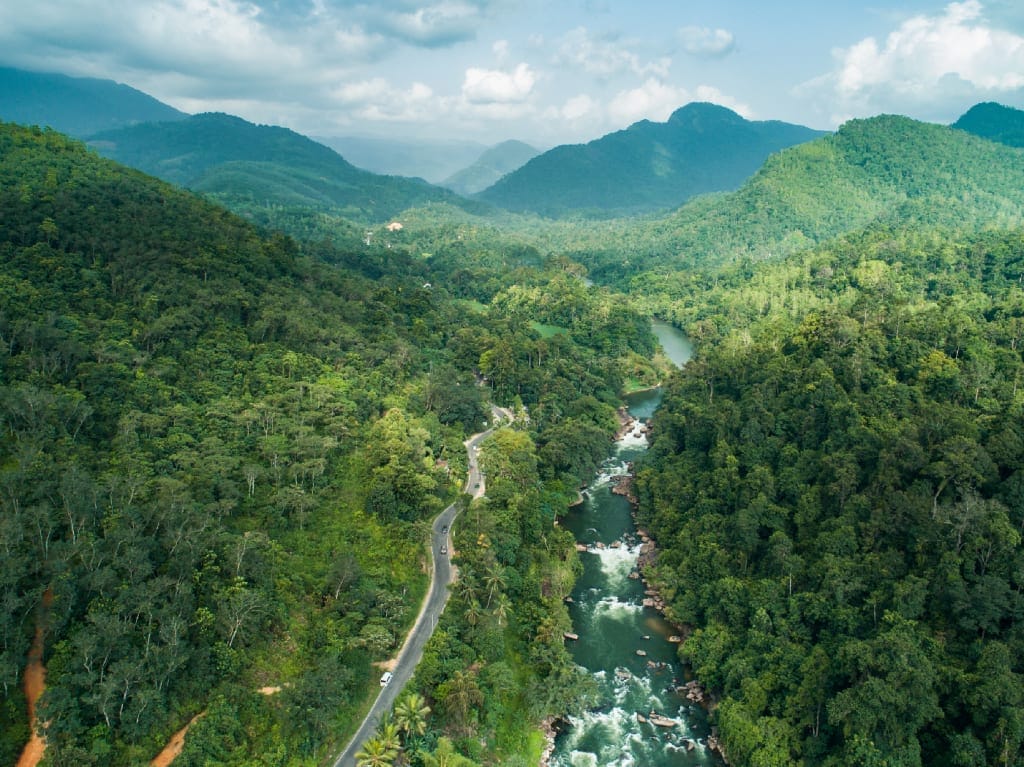
If you’re driving from Colombo, take the Southern Expressway to the Pinnaduwa exit near Galle, then follow the well-signed Udugama road inland. The tarmac rides the contours of the hills, and each bend reveals a new study in green—tea hedges trimmed like topiary, bamboo groves clacking gently, and flashes of kingfisher blue over narrow streams. Keep speeds modest; locals use the shoulders, and monkeys sometimes lope across without looking both ways.
The last mile and first impressions
The turnoff to the reserve arrives with little fanfare: a simple sign, a fence, and a weathered gatehouse where an officer smiles you in. The forest rolls forward like a tide. Cars settle under shade, and the first sounds you notice are soft and steady—the dry rattle of cicadas, a barbet’s hollow tok-tok-tok, and the drip of overnight rain still working its way down through the leaves. A path disappears into the undergrowth, just wide enough for two people walking side by side and silencing their footsteps to hear the forest breathe.
What to See and Do
Walk the arboretum trail
Start with the arboretum loop, where interpretive signs anchor your senses to names and shapes. A guide points out buttress roots that flare like ship keels and shows where lianas rope up to the canopy, gathering light drop by drop. Understory palms flicker with tiny movements—skinks weaving between fallen fronds, a timid junglefowl bouncing into the leaf litter with a muttered scold. You come to a clearing where sunlight leaks through and warms the shoulder of the path. Butterflies stitch from speargrass to wild ginger, and the forest’s green palette expands into whites, sulphurs, and a sudden electric blue.
Birdwatching at dawn
Bring binoculars and walk early, when the air feels cool and the birds stage their daily concert. Drongos scissor through shafts of gold light. A pair of bulbuls skitter along a branch, calling back and forth with bright, fluting notes. If you stand still, you might hear the resonant, slightly mournful whoop of a coucal from the thickets. Endemic species favor these wet-zone refuges, and Kottawa rewards patience: look for the iridescent wink of a hanging parrot among guava leaves or the shy shuffle of a thrush in shadow. With luck, you’ll glimpse a woodpecker fire off a staccato drum that vibrates in your ribs.
Butterflies and small wonders
Kottawa turns macro photography into an obsession. A raindrop beads along a fern rachis like a string of pearls. Ants ferry crumbs the size of boulders over moss, and a dragonfly hovers with measured grace above a shaded rivulet. Butterflies drift down the path in singles and pairs—the paper-thin flutter of a tree nymph, the purposeful zigzag of a tailed jay, the heavy wingbeat of a blue mormon gliding like velvet in motion. Lean close to a rotting log and an entire universe animates: millipedes coiling into bracelets, fungi freckling the wood with orange polka dots, and a tiny frog as bright as a lime tucked in the damp.
Streamside pauses and quiet corners
Small streams lace the reserve, sliding over stones polished glassy by monsoon flow. Follow their sound and you find delicate bridges of fallen branches, spiderwebs twinkling like chandeliers, and cool platforms of rock made for slow breaths. This is where you feel the forest’s temperature drop a degree and your shoulders drop with it. Pack a simple picnic—fruit, local buns, and a thermos—and choose a quiet corner to sit. Keep food sealed, leave no crumbs, and share space with dragonflies that hang like needles of light over the water.
Family-friendly nature learning
Kottawa invites curiosity without demanding endurance. Trails stay short and shaded, and the forest staff gladly point out posters and specimens in the small interpretation area near the gate. Children delight in spotting leaf shapes or counting how many shades of green they can name before someone runs out of numbers. Families, solo travelers can move at a comfortable pace, and guides adapt to different interests—birds for some, botany for others, or simply the thrill of walking somewhere that hums with life at every scale.
Best Time to Visit
From December to April, mornings often arrive clear and bright, and the forest feels freshly washed without the drama of heavy rain. Sunlight slices into the understory, butterflies wake early, and birds exchange gossip from branch to branch. Visit between 7:00 and 10:00 a.m. for mild temperatures, good light, and lively wildlife without the midday humidity. Even on warm days, the canopy softens the sun and keeps the air a degree cooler than the road outside.
May through September brings the southwest monsoon to the south, and Kottawa soaks it up with gusto. Showers sweep in and pass like stage curtains, replaced by steam that carries the peppery scent of cinnamon and the mineral tang of wet stone. If you enjoy moody light and jewel-toned greens, a rainy-day visit feels theatrical and intimate—just carry a light poncho and welcome the forest at its most honest. October and November can be changeable as well, but wildlife does not clock off; rain taps the leaves, frogs tune up, and the forest hum deepens.
Practical Information
Fees and hours
There is a modest entry fee, with rates typically differing for local and international visitors. A small charge may apply for cameras, and drone use is generally not permitted to protect wildlife and visitor privacy. The gate usually opens in the morning and closes by late afternoon; check current hours and fees through the Sri Lanka Forest Department or ask a local operator in Galle before you set out.
Weather and what to wear
Kottawa’s climate stays humid year-round, with sudden showers possible even on sunny days. Wear lightweight, breathable clothing in earthy colors, plus sturdy shoes that grip on damp paths. Long socks help, and in wet months, leech socks offer extra comfort. Pack a refillable water bottle, insect repellent, and a small towel or scarf to pat away sweat. A compact umbrella or poncho earns its place in your day pack more often than not.
Etiquette and safety
Move quietly, keep to marked trails, and avoid feeding or touching wildlife. Carry out all waste, including biodegradable scraps, as they alter animal behavior. Photography thrives here, but use natural light rather than flash around birds and insects. If you plan a guided walk, consider hiring from the gate; local guides know where a green pit viper might coil or a rare blossom might open after rain. Connectivity drops under the canopy, so download an offline map if you like to track your route.
Nearby Attractions
- Galle Fort: A UNESCO-listed citadel where cobbled lanes, galleries, and sea-battered ramparts pair history with sunset drama.
- Hiyare Reservoir & Biodiversity Centre: A serene lake ringed by wet-zone forest, excellent for quiet birding and reflective walks.
- Kanneliya Rainforest: A larger sister rainforest with longer trails, waterfalls, and even denser canopy for deeper immersion.
- Unawatuna & Jungle Beach: Golden arcs of sand and calm seas for snorkeling, balanced by leafy headlands and cliff-top shrines.
- Rumassala Hill: A folklore-rich promontory with herbal shrubs and sweeping Indian Ocean views just east of Galle.
- Yatagala Raja Maha Viharaya: A rock temple set among boulders and bodhi trees, where incense swirls in quiet courtyards.
- Wakwella Bridge and Gin Ganga: A scenic river crossing great for golden-hour photos and glimpses of river life.
- Handunugoda Tea Estate: Home of “virgin white tea,” offering fragrant factory tours and breezy verandah tastings near Ahangama.
- Hikkaduwa Marine Sanctuary: Coral gardens, reef fish, and glass-bottom boats for a saltwater counterpoint to Kottawa’s green world.
Travel Tips
- Start early to catch peak bird activity and cooler air; you will also have the trails mostly to yourself.
- Hire a local guide at the gate for sharper wildlife sightings and stories you will not find in a field guide.
- Carry a dry bag or zip pouches for phones and notebooks; showers can roll through without warning.
- Bring small change for tickets and tips; card payments are uncommon at the forest office.
- Skip single-use plastics; pack a reusable bottle and snack box, and take all waste back to town.
- Keep footwear simple and secure; muddy patches and slick roots reward shoes with grip over fashion.
- If mobility is a consideration, ask staff about the flattest section of trail; the arboretum loop suits most visitors.
- Combine your visit with lunch in Galle or Unawatuna; coastal cafés serve light meals perfect after a humid morning.
Conclusion
In Kottawa Reserve Forest, you trade spectacle for intimacy and come away richer for it. The forest does not shout; it leans close and whispers—through the bead of rain tracing a vine, the careful tilt of a lizard’s head, the soft boom of a coucal hidden in thicket. You walk out with slower footsteps and sharper eyes, tuned to the colors that hide in shadow and the stories carried by each leaf on the path.
Back on the Udugama road, the everyday world surges around you—buses exhaling, vendors calling, the sea tugging at your plans again. Yet a part of you still lingers under Kottawa’s canopy, where green comes in a thousand textures and morning light turns to silk. Plan a morning here, or linger longer if time allows, and let this modest rainforest remind you how quietly extraordinary our planet can be when we make space for it to breathe.