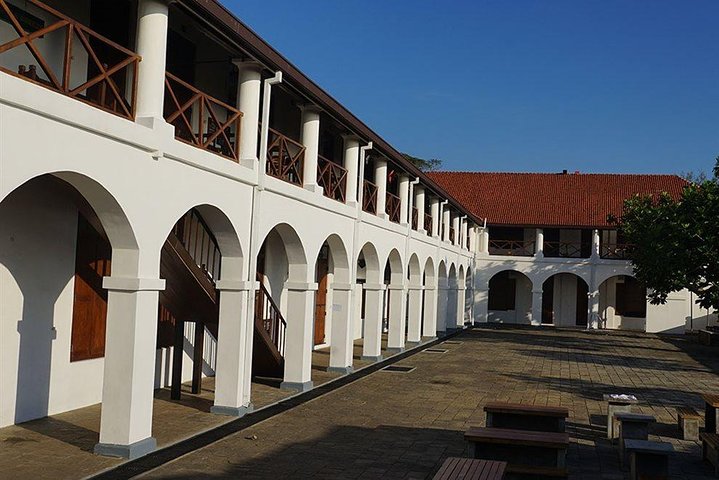
The Old Dutch Hospital in Galle stands inside the UNESCO-listed Galle Fort on Sri Lanka’s south coast, only a five-minute stroll from the iconic Clock Tower and the sea-battered ramparts. As you step beneath its colonnaded verandas, the air smells faintly of salt and cinnamon, and you feel the cool hush that thick coral-limestone walls hold even in tropical heat. Once a lifesaving sanctuary for sailors and officers of the Dutch East India Company, today it hums with cafés, design shops, and galleries, all threaded through sunlit courtyards and pillared walkways. It blends heritage and modern life without losing the soul of the fort, making it one of the most atmospheric places to pause, linger, and watch Galle’s daily rhythm unfold.
Its significance extends beyond postcard charm. The Old Dutch Hospital anchors the fort’s social life, drawing travelers and locals for morning coffee beneath clay roof tiles, late-afternoon gelato breaks, and breezy dinners as waves drum the outer walls. With its elegant arcades and restored timber beams, it provides a gentle introduction to the fort’s layered history, all while offering the comforts of a refined urban square where conversation flows as steadily as the ocean breeze.
Historical or Cultural Significance
Built during the Dutch colonial era in the late seventeenth century, the hospital formed part of a practical inland network that sustained maritime trade across the Indian Ocean. Sailors arrived weary and salt-scarred, bringing stories and ailments; the hospital answered both with care and order. Its long halls, high ceilings, and deep verandas were smart responses to the climate, channeling wind and protecting patients from monsoon deluges. The limestone-and-coral masonry, terracotta tiles, and shuttered windows speak of an architecture that valued shade, ventilation, and simplicity.
After the Dutch, the British adapted the building for administrative uses, as empires shifted and languages changed along these streets. Decades later, the site faced a new test when the 2004 tsunami surged along the coast. Restoration followed, guided by conservationists who respected the original fabric while welcoming fresh life into its arcades. When you run your hand over the columns, you feel a soft roughness and the faint cool of stone that has seen centuries. The hospital is no relic; it lives on as a public space where history is not locked behind glass, but walks past you with a shopping bag and a smile.
How to Get There
From Colombo, the coastal train is a classic and unhurried way to arrive. The carriages sway past coconut groves and stilt fishermen, and at times the sea runs so close that spray freckles the windows. As the tracks curve into Galle, you spot the fort’s stout walls, the cricket stadium’s green sweep, and the lighthouse flashing like a promise. Step off at Galle Railway Station, hop into a tuk-tuk, and let the driver buzz you through the Main Gate where the old drawbridge once lifted above a moat. The road narrows, the stones warm underfoot, and you soon reach the arcaded façade of the Old Dutch Hospital.
By road, the Southern Expressway draws a quick line from Colombo in around two hours, depending on traffic. Buses and private cars slip onto the coast road after the exit, where pastel houses and fruit stalls flicker by in a blur of color. If you stay in Unawatuna or Thalpe, a short tuk-tuk ride brings you to the fort walls, where you can walk the final stretch to the hospital under frangipani blossoms and sunlit bougainvillea.
What to See and Do
Admire the Architecture
Begin under the colonnades, where whitewashed pillars rhythmically frame shadow and light. Look up and notice the heavy timber trusses and gently sloping tiled roof designed to survive monsoon moods. The floors feel cool and slightly mottled, perfect for slow walking. Slip into the inner courtyard, where the building forms a calm rectangle around a pocket of sky, and listen for the soft echo of footsteps that drifts along the arcades.
Dine with Sea Breezes
Cafés spill onto verandas with small tables set for long, lazy meals. Order crisp hoppers with a coconut sambol that tingles on the tongue, or fresh-caught tuna that sings with lime and pepper. As the afternoon slants, gelato melts faster than you expect, and iced coffee lifts the mood from warm to buoyant. In the evening, restaurants dim the lights and open bottles, and conversation swells like the tide, steady and full.
Shop Thoughtfully
The boutiques here favor craftsmanship over clutter. Run your fingers across handloom fabrics dyed in earthy hues, try on lightweight linen designed for coastal living, and admire silverwork and sapphires set by local jewelers. Several stores stock fair-trade textiles and eco-conscious wares, so you can choose gifts that support artisans as much as they delight friends back home. Ask about the maker’s process; you often hear stories woven as tightly as the textiles.
Art, Books, and Little Discoveries
Small galleries showcase contemporary Sri Lankan art and photography, offering a refreshing counterpoint to the fort’s historic palette. Bookshops tuck slim novels and lush coffee-table titles into wooden shelves, perfect for a sunset rampart read. Between shops, posters announce occasional pop-ups, jazz nights, or heritage talks. Keep your eyes open, because spontaneity adds extra color to the day.
People-Watching and Pause
Take a seat on a veranda bench and watch life unspool. A delivery cart rattles by, sandals whisper over stone, and a child points skyward when a parrot flashes green against blue. The hospital’s rhythm invites you to slow down, sip water, and let the fort’s salt-and-spice air do the rest. This is where the city’s pulse softens, and travelers remember that lingering is an art.
Photography Moments
Morning light gilds the pillars and throws latticework shadows on the floors. Late afternoon draws honeyed tones from the walls, while golden hour kisses the arcades with a painter’s patience. Frame details: a weathered hinge, a curve of cornice, the meeting of stone and sky. Then step outside to catch couples and families strolling the ramparts as the ocean blushes pink.
Best Time to Visit
The most comfortable spell runs from November to April, when skies glow clear and evenings carry a dry, velvety breeze. By mid-morning, light dances across the arcades, and the hospital’s deep shade offers a welcome retreat. December and January can feel lively with holiday visitors, so arrive before coffee hour if you seek quieter moments under the colonnades.
From May to September, showers sweep in and out on the southwest monsoon. The rain comes like a drumroll, then fades into bright intervals that leave pavements shining and greens more intense. This season suits photographers who love textured skies and travelers who enjoy a slower, less crowded pace. Come prepared with a compact umbrella, and you will find that the hospital’s broad verandas make perfect shelters during passing bursts of rain.
Practical Information
Entry and Hours
Entry is free, as the Old Dutch Hospital functions as a public heritage and lifestyle precinct. Individual shops and restaurants keep their own hours, with most opening by late morning and staying active into the evening. If you plan a specific experience, check ahead or glance at posted times on the arcade pillars.
Weather and What to Wear
Galle stays warm year-round, typically between 27 and 31 degrees Celsius. Light, breathable clothing, a hat, and comfortable walking shoes will serve you well on the fort’s stone paths. Keep a refillable water bottle at hand; many cafés are happy to top you up with filtered water.
Etiquette and Respect
This is a protected heritage site and a living neighborhood. Walk gently, avoid leaning on old plaster, and keep voices low in quieter corners. Dress with modesty in mind, especially if you plan to step into nearby places of worship. Always ask before photographing people, and support local businesses that treat staff and makers fairly.
Accessibility and Facilities
The hospital’s arcades are generally level, though some thresholds and cobbles may challenge wheels or tired feet. Most restrooms sit inside cafés and restaurants, available to customers. Cards are widely accepted, but carry small cash for tuk-tuks and tiny purchases. ATMs operate near the fort gates and in central Galle.
Nearby Attractions
- Galle Lighthouse: A short walk from the hospital, best visited at sunrise or when the wind picks up late afternoon.
- Ramparts and Flag Rock Bastion: A golden-hour stroll above the sea, with cliffside views and a soundtrack of waves.
- Dutch Reformed Church (Groote Kerk): A quiet interior with memorial plaques and stained glass that glows at noon.
- National Museum of Galle: A compact trove of artefacts that deepen the fort’s layered story.
- Maritime Archaeology Museum: Shipwreck lore, navigational tools, and salt-licked curiosity.
- Pedlar Street: Boutiques, cafés, and street-side conversations that spill onto warm stones.
- Meera Mosque and All Saints’ Church: Side-by-side faiths that highlight the fort’s inclusive character.
- Unawatuna Beach: A ten-minute tuk-tuk ride for a swim and a coconut under leaning palms.
Travel Tips
Arrive early to walk in cooler air and photograph the arcades without crowds. Aim for a late lunch or early dinner to find a table on the veranda, especially on weekends and holidays. If you take the train, book a window seat on the ocean side for the best views of the coast. Carry a light scarf; it doubles as sun cover and evening layer when sea breezes freshen.
Learn a few local phrases. Ayubowan or kohomada will spark smiles, and nanri or istuti for thanks adds warmth to every exchange. Drink plenty of water, pace yourself in the heat, and step into the shade when the day climbs. Choose shops that share provenance, because a transparent story often signals fair pay and durable quality.
Be mindful when bargaining; gentle humor and respect go further than hard edges. Keep your plastic footprint low by refusing single-use bags and straws. At night, the fort feels welcoming, yet good sense still applies, so stick to lit streets and keep valuables close. Finally, remember that the Old Dutch Hospital is not a mall; it is a living page of the city’s book. Walk with curiosity, and it will reward you with quiet details hiding between its lines.
Conclusion
When the sun drops and the arcades glow amber, the Old Dutch Hospital feels like a lantern lit within Galle Fort. You taste the salt on your lips, hear the low thrum of the sea beyond the walls, and feel time loosen its grip. History settles into the bones of the building, yet the present breathes through laughter at café tables and the soft footfall of evening strollers. Visit for an hour or linger through a day, and you will leave with more than photographs. You carry the memory of shade and stone, of spice and ocean wind, and of a place that continues to heal in its own quiet way—offering rest, connection, and the kind of beauty that lasts.