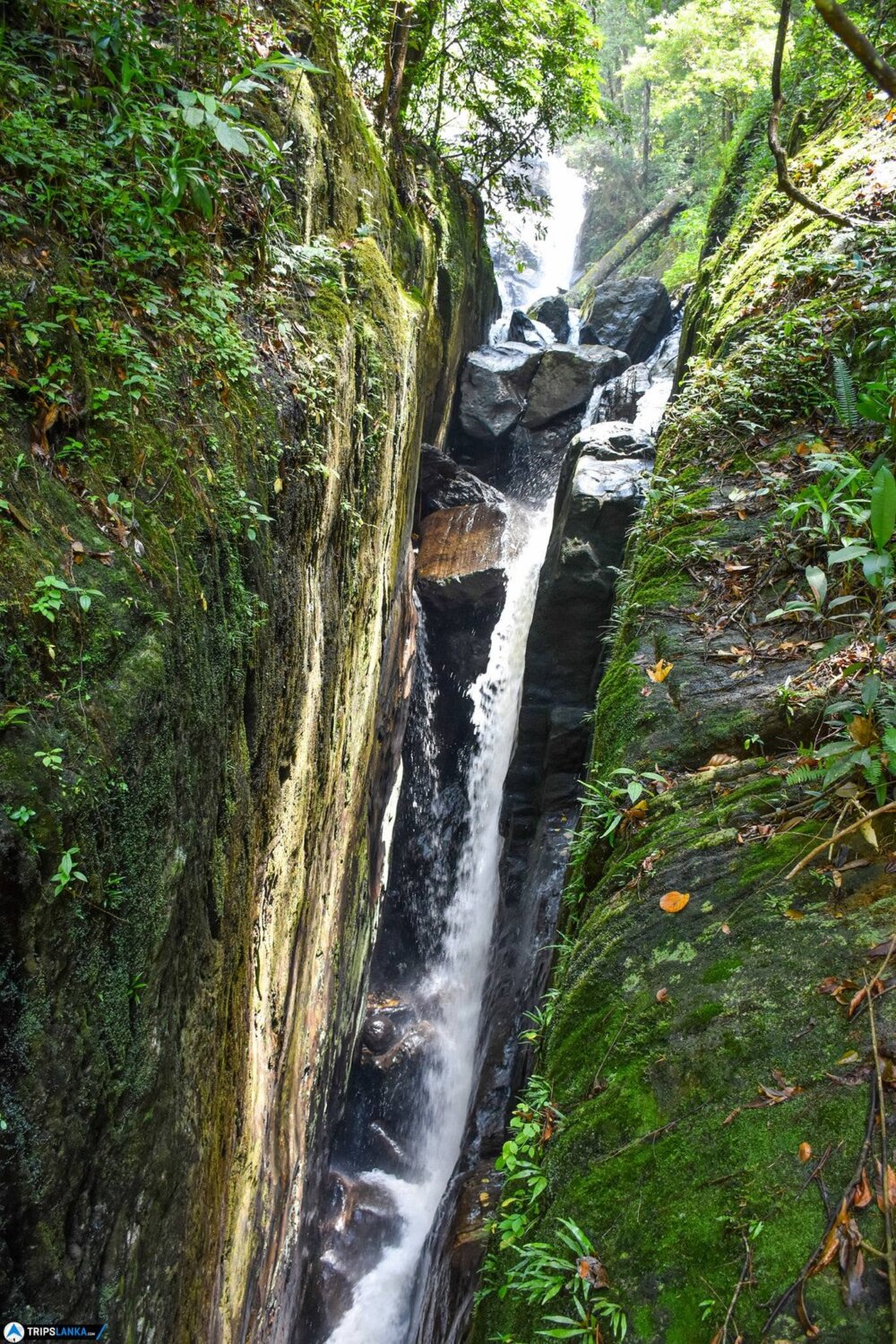
Hidden in the emerald folds of the Sinharaja Rainforest, Gal Oruwa Ella Water Fall sits near the village of Lankagama in the Neluwa area of Sri Lanka’s Southern Province. The name tells a story in Sinhala: gal means rock, and oruwa means canoe, a clue to the curious shape that nature carved here. The stream squeezes through a narrow, canoe-like chute of stone before spilling into jade pools, creating a spectacle that feels both intimate and powerful. It is not the tallest waterfall in the country, yet few places blend raw geology, rainforest soundscapes, and community warmth quite as naturally as this one.
Travelers who make the journey find more than a pretty cascade. They step into the living, breathing edge of a UNESCO World Heritage rainforest, where moisture pearls on leaves, frogs chirp from unseen perches, and the air smells like wet bark and cinnamon woodsmoke drifting from kitchen hearths. Gal Oruwa Ella stands as part of a chain of falls on the Lankagama side of Sinharaja, and it rewards unhurried exploration. The moment you hear the rush growing through the trees, you understand why residents value this place as a landmark of their landscape and their daily rhythm.
Historical or Cultural Significance
Sinharaja’s reputation as Sri Lanka’s last major tract of primary lowland rainforest brings global attention, yet the stories that bind Gal Oruwa Ella to its neighbors are local and patient. For generations, families around Lankagama have gathered by these waters on poya days and school holidays, cooling their feet in the current and unwrapping parcels of rice and sambol under giant ferns. Many residents work small tea gardens, tend cinnamon peels, or tap kitul palms for treacle and jaggery, and the waterfall hums at the edge of these rhythms, a natural clock that swells after rain and softens in drier spells.
The name “stone canoe” is more than a poetic flourish. When you stand beside the chute and watch the torrent thread itself through the rock, you see the resemblance. Elders speak of the river slowly cutting this groove over lifetimes, polishing the sides smooth as bone. That image carries a quiet lesson shared with children who play here: water shapes stone through patience. In a region that prizes gentle persistence, the metaphor lands close to home.
How to Get There
Reaching Gal Oruwa Ella Water Fall becomes part of the adventure, because the journey hints at the change from busy roads to green hush. As you leave the coastal flats and climb into hill shadows, the air turns cooler, and the curve of each bend reveals a tighter weave of jungle. Motorbikes buzz past with sacks of tea leaves, and spice-scented breezes drift from home gardens, setting the tone for what awaits under the canopy.
From Colombo via Neluwa and Lankagama
Most travelers drive the Southern Expressway and exit near Pinnaduwa or Imaduwa, then follow backroads through Baddegama to Neluwa. The road narrows as it edges into the foothills, crossing the Gin Ganga on modest bridges where children wave from the rails. From Neluwa, a rougher road winds toward Lankagama, passing misty tea rows and cinnamon sheds where pale curls of bark dry in the sun. Expect a slow final stretch with occasional potholes and puddles after rain; four-wheel drive helps, though careful two-wheelers make it too. The last village shops sell biscuits, fruit, and salted peanuts, and then the forest draws closer until the trailhead appears near a Forest Department post or local guide point.
Via Deniyaya and the Pitadeniya side
Another route approaches the Sinharaja reserve near Deniyaya, where the Pitadeniya entrance offers a more formal gateway with a conservation ticket counter and guide services. From there, you can arrange a trek that includes several waterfalls, sometimes linking to the Lankagama side with experienced guides. This approach suits travelers already exploring Deniyaya’s tea country, and it pairs well with a visit to a small factory or leaf-collection point to understand how the local economy and the forest intersect.
The final approach on foot
No matter the road, the last meters unfold on foot along damp, root-laced paths. A guide points out leech ferns and tiny orchids, and the earth smells like fresh rain even on clear days. Bird calls roll through the trees, and if you are lucky, the electric chatter of the Sri Lanka blue magpie flashes before vanishing into leaves. When the path dips and the river’s voice swells, you step onto smooth rock ledges, feel spray on your forearms, and finally see the stone canoe channel focusing the water in a glittering rush.
What to See and Do
Gal Oruwa Ella invites you to slow down. This is not a spot for rushing from one viewpoint to the next. The waterfall changes with every hour, every shower, and every shaft of light that breaks the canopy. Give it time, and it reveals little dramas in water, leaf, and stone.
Watch the water thread the “stone canoe”
Stand beside the narrow cut and watch the torrent narrow to a silk ribbon that grows muscle as it squeezes through. The sides glisten with algae in shades of bottle green and olive, while foam curls in eddies like soft lace. On sunny days, micro-rainbows blossom in the spray, and dragonflies hover at the edges, making the scene feel painted and alive.
Swim and soak, with care
Below the chute, calmer rock pools collect the water into clear, tea-tinted basins. On drier days, you can slip in and feel the cool wrap around your calves, then your shoulders. Always check depth and current with your guide, because the river rises unexpectedly after upstream showers. When conditions allow, floating on your back beneath the green dome feels like lying under a cathedral of leaves, with sunlight quilting the surface above your eyes.
Listen for birds and spot endemic life
Bring patience more than a long lens. Sinharaja’s stars often reveal themselves to quiet walkers. Guides scan the understory for skulking babblers, point to a giant squirrel leaping between branches, and trace the tail of a drongo ribboning behind a sunlit trunk. Even if you miss the rarest species, the forest’s chorus surrounds you: dripping leaves, cricket strings, and soft knocks from a distant woodpecker.
Photograph textures, not only the torrent
While the chute commands attention, your best images often come from details. Frame a fern with a single bead of water clinging to its tip. Catch the light on the damp rock lip where the stream first pinches tight. Capture hands cupping river water, bracelets flashing as droplets cascade back into the pool. Early morning offers soft light and fine mist, while late afternoon sets the foliage aglow in warm tones.
Share a village lunch or tea
Many residents offer simple meals at family tables, especially if arranged through your guide. A curry of young jak, a heap of red rice, and a spoon of coconut sambol taste brighter after an hour on the trail. You might sip kitul treacle stirred into hot black tea and notice the faint caramel aroma rising with the steam. Conversations zigzag from weather to harvest, and these gentle exchanges anchor the waterfall in a human setting as welcoming as the river itself.
Best Time to Visit
Sinharaja wears rain like a favorite shawl, so showers remain likely any month. However, drier windows usually arrive from January to March and again around August to September. During these months, trails feel firmer, rivers tend to run clearer, and the light often filters through without constant drizzle. The water level still sings with energy, and the falls hold their character without turning unruly.
Heavy monsoon periods, typically from May to July and October to November, bring surging flows, leeches in enthusiastic numbers, and slippery rock. Some visitors love the theatrical mood of a storm-charged day, though guides sometimes advise waiting for safer conditions. Early mornings offer calm even in busier weeks, with birds more active and the air lightly perfumed by wet leaves and woodsmoke from breakfast fires in the village.
Practical Information
Entry fees and permits
Access to Gal Oruwa Ella often involves passing a Forest Department checkpoint, particularly if you enter through a formal Sinharaja gate such as Pitadeniya. A conservation entry fee applies, with rates that vary by nationality and can change without notice. As a guide, expect a modest fee for Sri Lankan visitors and a higher, yet still affordable, amount for international travelers, usually a few thousand Sri Lankan rupees. Local guides are recommended and sometimes required, and their fees support community livelihoods. Bring cash in small denominations, because card facilities rarely exist at trailheads.
Weather, clothing, and safety
Prepare for humidity, sudden showers, and slick stone. Lightweight, quick-dry clothing helps, along with sturdy shoes with grippy soles. Many hikers use leech socks or tuck trousers into socks, and a light saline spray or lemongrass oil can deter eager hitchhikers. Pack a rain jacket, a dry bag for electronics, and enough drinking water to avoid relying on streams. Do not step onto wet rock near the chute, and always heed your guide’s assessment before swimming. After rain, currents change character fast, and safety comes first.
Local etiquette and leave-no-trace
Residents around Lankagama welcome visitors who move with care and respect. Dress modestly when walking through villages, greet people with a smile and a “ayubowan,” and ask before photographing anyone or their home. Keep noise low inside the forest, carry out all waste, and skip soaps in natural pools. If you enjoy a meal at a family home, expressing thanks and leaving a fair tip makes a quiet difference. These small gestures help ensure the waterfall remains a source of pride and not a burden.
Nearby Attractions
- Duwili Ella, another dramatic fall on the Lankagama side, where spray hangs in the air like fine dust.
- Brahmana Ella, a multi-tiered cascade with photogenic ledges and cool, shaded pools beneath giant leaves.
- Thattu Ella, a wide, platter-like flow ideal for long-exposure photography on softer afternoons.
- Sinharaja Rainforest trails from the Pitadeniya entrance, with chances to spot endemic birds and towering lianas.
- Neluwa Hanging Bridge across the Gin Ganga, a slender ribbon over jade water and a favorite for village views.
- Tea smallholdings near Deniyaya, where you can learn how leaf plucking and withering shape your morning cup.
Travel Tips
Start early to catch the forest waking. Morning light sifts down in soft columns, footprints on the trail stay few, and birds stitch lively threads through the quiet. You also give yourself margin for weather changes, because a midday deluge might ask you to linger under a broad leaf or a trail shelter until the rhythm softens again.
Hire a guide from Lankagama or through a Sinharaja entrance, both for safety and deeper connection. A good guide transforms a walk into a conversation with the forest, pointing to camouflaged insects, gathering places for purple-faced langurs, and herbs villagers use to soothe small aches. They also read the river’s language, choosing paths and pools that fit the day’s mood and your comfort.
Connectivity fades as you enter the green world, so download offline maps, share your route with someone you trust, and carry a power bank if you photograph with your phone. Footpaths can feel labyrinthine after a few bends, and a calm, prepared approach keeps the day light. Finally, plan for simple pleasures: a packet of ripe bananas for energy, a hand towel for a quick dry after a dip, and a spare shirt that feels like fresh air on your skin before the ride back down the valley.
Conclusion
Gal Oruwa Ella Water Fall does not shout its presence; it invites you to lean in. You come for the narrow chute and the promise of rainforest magic, and you stay because each detail grows luminous when given time. Water braids through stone, birds cross the canopy like bright thoughts, and the village smiles carry the same warmth as a cup of sweet tea after a wet trail.
When you leave, you carry the river’s lesson in your step. Patience sculpts beauty, and small choices—arriving early, treading gently, listening more than speaking—open the forest’s doors. If your travels wind through southern Sri Lanka, make room for this “stone canoe” in your journey. Stand at its edge, feel the spray on your hands, and let Sinharaja’s green hush write itself into your memory.